
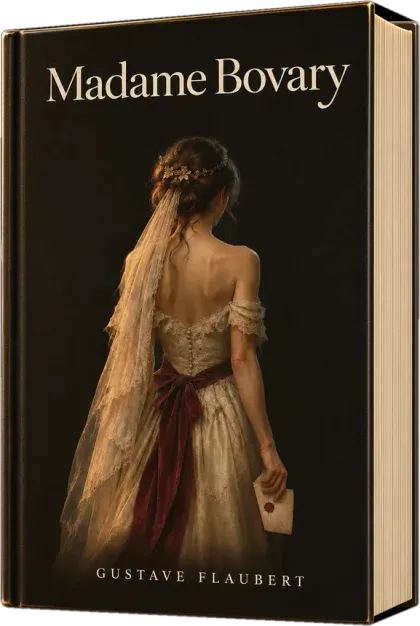
Gustave Flaubert · 1857
Madame Bovary
Emma Rouault has learned to expect more from life than a Normandy farmhouse can offer: music, splendour, a love that transforms everything. Marriage to Charles Bovary, a kindly country doctor, seems to promise her escape. Yet the days at Tostes settle into meals, patients, familiar roads—and a tenderness that leaves her strangely cold. Then an invitation to an aristocratic ball opens a door upon another world, glittering and apparently within reach. Between the life Emma possesses and the life she imagines, a dangerous distance begins to grow. How much of ourselves can we ask happiness to change—and what happens when ordinary life will never be enough?
- Reading time
- About 7 h 25 min
- With the voice
- 11 h 8 min
- Length
- 115,687 words · 35 chapters
- Level
- B2 CEFR
Read the opening · Part 1, Chapter 1 · 7 min
“We were in class when the headmaster came in, followed by a “new fellow,” not wearing the school uniform, and a school…”
The first minutes of Part 1, Chapter 1, the way the Lightkeeper app reads it: one line of words past an amber letter, with the voice. Switch to Page to see the whole paragraph.
End of the opening
Part 1, Chapter 1 goes on in the app.
The rest of the book waits in the app.
Text: Gustave Flaubert. Tap the ribbon to pause.
Who’s who
Madame Bovary characters
-
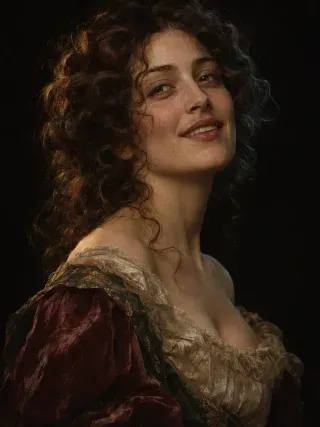
Emma Bovary
A farmer’s daughter educated in a convent, Emma expects love to bring the splendour and intensity she has discovered in books. As a country doctor’s wife, she longs for an existence that will answer those expectations.
First named in Part 1, Chapter 2
-
Charles Bovary
A modest country doctor, Charles finds in marriage to Emma the happiness and beauty missing from his earlier life. His devotion makes it difficult for him to understand her dissatisfaction.
First named in Part 1, Chapter 1
-
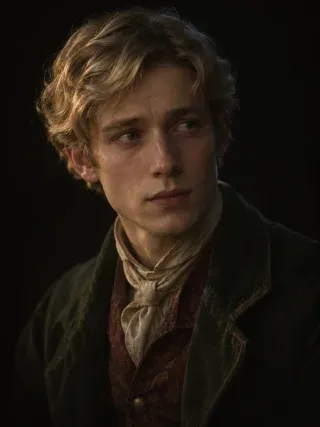
Léon Dupuis
A young notary’s clerk with literary tastes and dreams of life beyond Yonville. His sympathy with Emma draws them together, though timidity restrains him.
First named in Part 2, Chapter 1
-
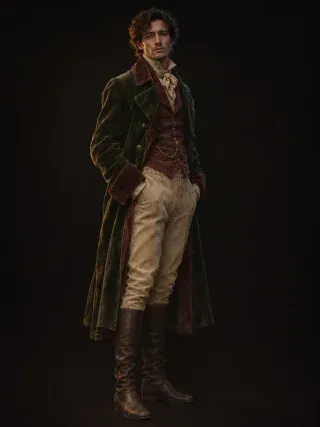
Rodolphe Boulanger
A wealthy landowner experienced in affairs, Rodolphe recognises Emma’s hunger for passion. He seeks pleasure while preserving his comfort and independence.
First named in Part 2, Chapter 7
-
Monsieur Homais
Yonville’s chemist is an outspoken champion of progress and a tireless promoter of his own importance. He wants professional influence, public recognition, and freedom from interference.
First named in Part 2, Chapter 1
-
Monsieur Lheureux
A merchant whose tempting goods come with convenient offers of credit. His accommodating manner serves a keen interest in profit and his customers’ dependence.
First named in Part 2, Chapter 1
-
Berthe Bovary
Emma and Charles’s daughter, Berthe needs affection and care amid the adults’ competing preoccupations. Her father cherishes elaborate hopes for her future.
First named in Part 2, Chapter 3
-
Monsieur Rouault
Emma’s widowed father farms at the Bertaux and welcomes Charles into the family. His affection for his daughter belongs to the familiar country life she longs to escape.
First named in Part 1, Chapter 2
In the app you can talk to 12 of the characters. They answer from the page you’re on, so the story ahead stays yours to find. How it works
What happens
Madame Bovary summary
Spoilers below.
The Open Shutter
When Charles Bovary first appeared at school in Rouen, his awkwardness supplied the other boys with an afternoon’s entertainment. Even his name would not come properly out of his mouth. He sat among them with the bewildered patience that was to accompany him through life, applying himself without distinction, offending no one deliberately, understanding things a little late.
His mother had ambitions enough for them both. His father, once a military man, had squandered money and grown coarse with idleness; she meant her son to become somebody. Charles studied medicine, strayed into drinking and diversions, failed an examination, tried again, and eventually qualified. At Tostes, where she established him in practice, his mother also provided a wife: Héloïse Dubuc, a widow whose supposed fortune recommended her more strongly than her person. Charles had expected marriage to bring liberty. Instead, he acquired someone who watched his movements and complained of being neglected.
One night a messenger summoned him to the Bertaux, where Monsieur Rouault had broken his leg. The fracture was simple; the farmer’s daughter was less easily forgotten. Emma had dark eyes, fine hands, and accomplishments unusual in a farmhouse. Charles returned after his services were scarcely needed. Héloïse grew jealous, forbade the visits, and then suffered the exposure of her greatly exaggerated wealth. Soon afterward she died. Charles mourned her sincerely; she had loved him, after all.
But the road to the Bertaux remained. Rouault welcomed the young widower, and Charles listened while Emma spoke of her convent education and the weariness of country life. When he finally wished to propose, he could hardly find the words. Her father undertook the business. An opened shutter would signify consent. Charles waited outside; the shutter swung back.
Emma had once imagined a wedding at midnight beneath the light of torches. There were instead forty-three guests, country clothes, enormous dishes, and feasting prolonged far into the night. Charles was radiant. Rouault, accompanying the couple partway home, remembered his own marriage and returned alone across the fields.
At Tostes, Emma found another woman’s bridal bouquet in the bedroom. Charles carried it away. Her own married life had begun; she waited for the happiness by which she would recognise it.
Inside the book
35 chapters
- Part 1, Chapter 1
- Part 1, Chapter 2 A summons in the night sends Charles towards a remote farm and a patient he has never met.
- Part 1, Chapter 3 Old Rouault brings payment and consolation, but what can one widower offer another?
- Part 1, Chapter 4 Carriages crowd the gates as two families gather, their old quarrels set aside for the wedding.
- Part 1, Chapter 5 Behind the Bovarys’ front door, married life takes shape in rooms where nothing stays private.
- Part 1, Chapter 6 Before marriage, Emma learned to dream among convent walls, sacred perfumes, and borrowed stories.
- Part 1, Chapter 7 If this is happiness, why does Emma imagine it everywhere but here?
- Part 1, Chapter 8 At the château, Emma enters a world whose smallest gestures seem to promise another life.
- Part 1, Chapter 9 A silk cigar case gives Emma a whole imagined Paris, while her own window still looks out on Tostes.
- Part 2, Chapter 1 Beyond the hill lies Yonville, a town divided by a river and waiting to be seen at closer quarters.
- Part 2, Chapter 2 As Emma warms herself at the inn’s fire, a young stranger watches from the other side.
- Part 2, Chapter 3 A brief greeting leaves Léon waiting all day for a conversation he hopes to begin again.
- Part 2, Chapter 4 Emma knows the sound of Léon’s approach, though he passes her window without a glance.
- Part 2, Chapter 5 On a snowy outing, Emma leans against her husband’s shoulder and turns to look at him.
- Part 2, Chapter 6 The evening bell awakens Emma’s longing for the faith and shelter of her schooldays.
- Part 2, Chapter 7 Léon has gone, yet Emma finds him in every empty chair and every familiar path.
- Part 2, Chapter 8 Yonville prepares its grandest spectacle, and even the smallest rivalries demand a public stage.
- Part 2, Chapter 9 After six weeks of calculated silence, Rodolphe returns to find Emma alone.
- Part 2, Chapter 10 Every window seems to watch Emma on her way home, until something in the grass stops her short.
- Part 2, Chapter 11 Homais has a plan for Charles’s reputation, and Emma begins to imagine something firmer than love.
- Part 2, Chapter 12 Emma wants a life elsewhere with Rodolphe; he laughs, but she keeps returning to the idea.
- Part 2, Chapter 13 Alone at his desk, Rodolphe searches old keepsakes for the feeling he needs to put into words.
- Part 2, Chapter 14 As Emma recovers, Charles faces mounting bills and a tradesman who knows when to press his advantage.
- Part 2, Chapter 15 At the opera, Emma takes her seat with the air of a duchess, her heart already beating faster.
- Part 3, Chapter 1 Seeing Emma again revives Léon’s old hopes, but he no longer trusts his future to timidity.
- Part 3, Chapter 2 Emma hurries home to keep her promise, only to find an urgent summons waiting in the village.
- Part 3, Chapter 3 Behind closed doors in Rouen, Emma and Léon taste a happiness that seems to need no other world.
- Part 3, Chapter 4 Unable to bear another absence, Léon returns to Yonville and watches for Emma’s shadow.
- Part 3, Chapter 5 Every Thursday begins in silence, with Emma dressed before dawn and waiting for the coach.
- Part 3, Chapter 6 A polite invitation gives Homais visions of a night in Rouen, with Léon as his guide.
- Part 3, Chapter 7 As the bailiff inventories Emma’s possessions, he reaches a locked desk containing Rodolphe’s letters.
- Part 3, Chapter 8 Emma returns to Rodolphe’s door with old tenderness stirring and no other hope left.
- Part 3, Chapter 9 Charles cannot grasp the stillness before him, or bear to be led away from his wife.
- Part 3, Chapter 10 An evasive letter sends old Rouault racing towards his daughter, caught between hope and dread.
- Part 3, Chapter 11 Berthe asks for her mother, while Charles clings to Emma’s possessions and the bills keep coming.
Lines worth keeping
Madame Bovary quotes
Because lips libertine and venal had murmured such words to him, he believed but little in the candour of hers; exaggerated speeches hiding mediocre affections must be discounted; as if the fullness of the soul did not sometimes overflow in the emptiest metaphors, since no one can ever give the exact measure of his needs, nor of his conceptions, nor of his sorrows; and since human speech is like a cracked tin kettle, on which we hammer out tunes to make bears dance when we long to move the stars.
But the disparaging of those we love always alienates us from them to some extent. We must not touch our idols; the gilt sticks to our fingers.
Since Bovary’s death three doctors have followed one another at Yonville without any success, so severely did Homais attack them. He has an enormous practice; the authorities treat him with consideration, and public opinion protects him. He has just received the cross of the Legion of Honour.
He did his little daily task like a mill-horse, who goes round and round with his eyes bandaged, not knowing what work he is doing.
Charles had seen in marriage the advent of an easier life, thinking he would be more free to do as he liked with himself and his money. But his wife was master; he had to say this and not say that in company, to fast every Friday, dress as she liked, harass at her bidding those patients who did not pay. She opened his letters, watched his comings and goings, and listened at the partition-wall when women came to consult him in his surgery.
Once, during a thaw the bark of the trees in the yard was oozing, the snow on the roofs of the outbuildings was melting; she stood on the threshold, and went to fetch her sunshade and opened it. The sunshade of silk of the colour of pigeons’ breasts, through which the sun shone, lighted up with shifting hues the white skin of her face. She smiled under the tender warmth, and drops of water could be heard falling one by one on the stretched silk.
ThemesRomantic longing and ordinary lifeMarriage and women’s confinementDesire, luxury, and debtSelf-deception and misplaced faithBourgeois ambition and hypocrisyLove’s unequal burdens
Questions
Before you start
How long does it take to read Madame Bovary?
Madame Bovary is 115,687 words. At an average adult pace for fiction, about 260 words a minute (Brysbaert, 2019), that’s about 7 h 25 min. With the voice at normal speed it takes 11 h 8 min, and about 7 h 26 min at 1.5×.
Is there a Madame Bovary audiobook with the text?
Yes. In Lightkeeper the voice reads while the words move past one amber letter, so your eyes and ears stay on the same word. Speed it up or slow it down and the voice keeps pace. The opening of Part 1, Chapter 1 is on this page to try.
What reading level is Madame Bovary?
B2 on the CEFR scale, which runs from A1, the easiest, to C2.
Read all of Madame Bovary in Lightkeeper
With the voice, the gems to find and the characters to talk to. On iPhone and Android.
More from the shelf
You might read next
-
 The Lady with the Dog and Other Stories Anton Chekhov 3 h 15 min · B2
-
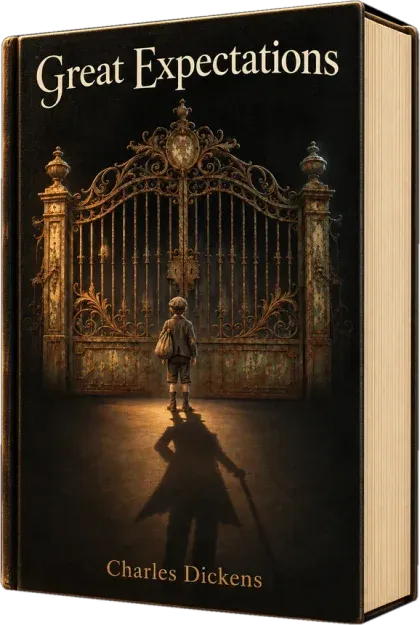 Great Expectations Charles Dickens 16 h 40 min · B2
-
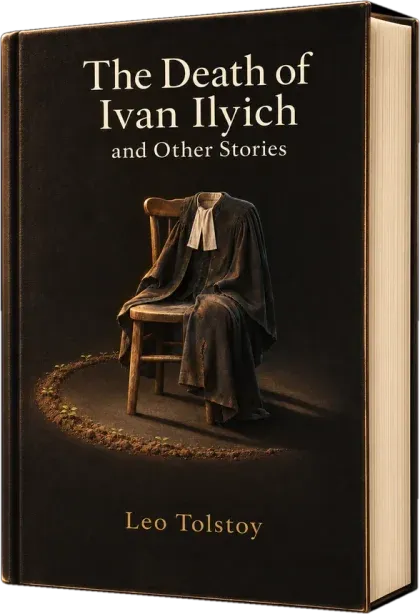 The Death of Ivan Ilyich and Other Stories Leo Tolstoy 3 h 5 min · B2
-
 Crime and Punishment Fyodor Dostoevsky 19 h 35 min · B1
-
 The Red Badge of Courage Stephen Crane 4 h 25 min · B1
-
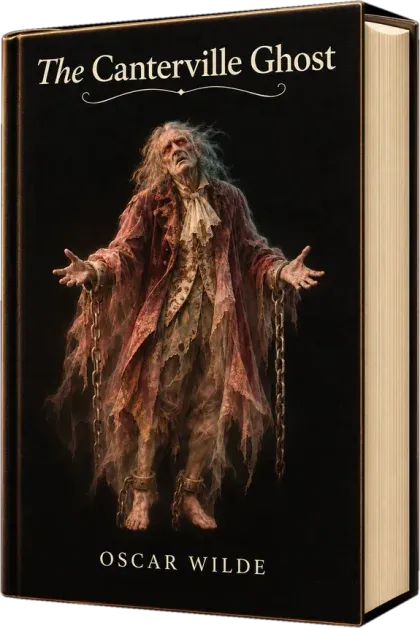 The Canterville Ghost Oscar Wilde 1 h · B2