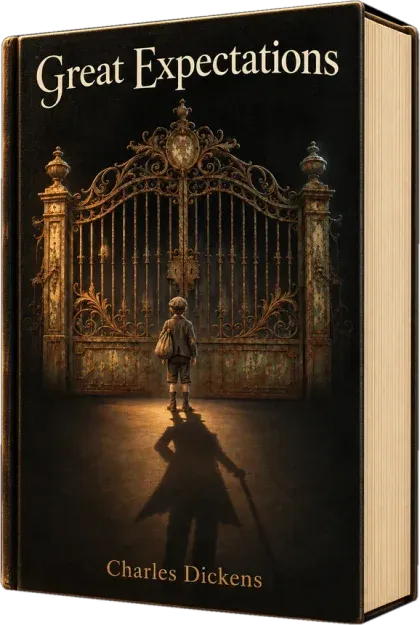
Charles Dickens · 1861
Great Expectations
On the bleak marshes of Kent, a frightened orphan named Pip steals food and a blacksmith’s file for an escaped convict. It is a secret he hopes to bury. Then an invitation carries him into Satis House, where a rich woman sits in her ruined bridal dress and a beautiful girl teaches him to despise his coarse hands and heavy boots. Until now, Pip has wanted little beyond the kindness of Joe, his sister’s husband. Now he longs to become someone else. In a world that measures people by money, manners, and birth, what might a boy surrender for the chance to be a gentleman—and who will bear the cost of his shame?
- Reading time
- About 11 h 55 min
- With the voice
- 16 h 40 min
- Length
- 185,474 words · 59 chapters
- Level
- B2 CEFR
Read the opening · Chapter 1 · 10 min
“My father’s family name being Pirrip, and my Christian name Philip, my infant tongue could make of both names nothing…”
All of Chapter 1, the way the Lightkeeper app reads it: one line of words past an amber letter, with the voice. Switch to Page to see the whole paragraph.
End of Chapter 1
The rest of the book waits in the app.
You caught 0 gems. The rest of the book waits in the app.
Text: Charles Dickens. Tap the ribbon to pause; tap while a line shimmers to catch it.
Who’s who
Great Expectations characters
-
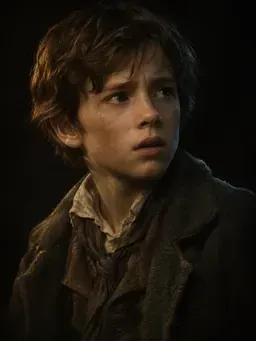
Pip
An orphan raised beside a village forge, Pip longs to escape the poverty and awkwardness that Estella teaches him to despise. His hunger to become a gentleman struggles with his affection for those who already love him.
First named in Chapter 1
-
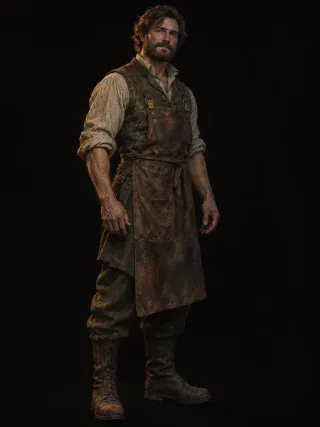
Joe Gargery
Pip’s brother-in-law is a blacksmith whose strength is matched by patience and kindness. He wants to protect Pip and keep their companionship intact.
First named in Chapter 1
-

Estella
Miss Havisham’s beautiful adopted daughter has been taught to attract admiration while withholding affection. Proud and guarded, she seeks independence within a life shaped by another person’s injury.
First named in Chapter 8
-

Miss Havisham
A wealthy recluse who wears her faded bridal dress among the remains of an abandoned wedding. She cultivates Estella’s power over men as an instrument of revenge.
First named in Chapter 7
-
Abel Magwitch
An escaped convict whose terrifying appearance conceals hunger, suffering, and a capacity for gratitude. He wants freedom and cherishes the possibility of answering kindness with kindness.
First named in Chapter 40
-

Biddy
Pip’s patient friend and early teacher, Biddy combines practical intelligence with quiet affection. She hopes for useful work and honest happiness, and questions the ambitions that make Pip dissatisfied.
First named in Chapter 7
-
Herbert Pocket
A cheerful young man who becomes Pip’s close friend and an unassuming guide to London manners. He dreams of commercial success and earning enough to marry Clara.
First named in Chapter 11
-
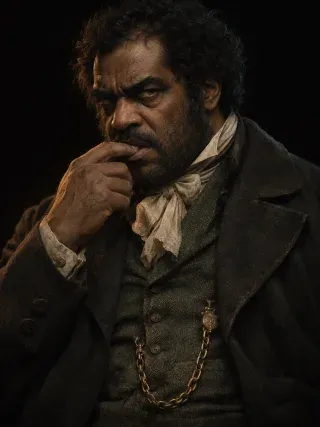
Mr. Jaggers
A formidable London lawyer entrusted with administering Pip’s mysterious expectations. He prizes discretion, evidence, and professional control over any public display of feeling.
First named in Chapter 18
In the app you can talk to 14 of the characters. They answer from the page you’re on, so the story ahead stays yours to find. How it works
What happens
Great Expectations summary
Spoilers below.
The Marshes
My first clear understanding of the world was that it contained the graves of my parents, a great deal of cold water, and myself—a small orphan called Pip, with very little protection against either the weather or mankind. Beyond our churchyard stretched the marshes; beyond the marshes, the river; and from that desolate country there rose one evening a man in coarse grey clothes, with an iron upon his leg.
He turned me upside down, ate my bread, and required of me a file and provisions. There was, he said, another man concealed nearby, particularly accomplished at finding little boys in their beds. I believed him thoroughly. Fear accompanied me home to my sister, Mrs. Joe Gargery, who considered my existence a burden for which I could never sufficiently apologise.
Her husband Joe was a blacksmith, and the gentlest creature I knew. We were fellow sufferers under her government, though he stood between me and its severities whenever he could. To rob his forge seemed a dreadful return for his goodness. Nevertheless, before Christmas morning had properly broken, I stole his file, together with food, brandy, and a pork pie, and carried my guilt into the mist.
I encountered another fettered fugitive before finding my own. Mine devoured the food like a starving animal, yet something in his face altered when I showed concern for his hunger. At mention of the other man he became fierce again, and I left him filing at his iron.
Christmas dinner brought its customary company and its customary proofs that children were naturally wicked, myself particularly so. Joe administered what comfort he could in gravy. Just as discovery of the missing pie appeared inevitable, soldiers arrived with handcuffs. They wanted the blacksmith’s assistance, not mine; but when we afterwards followed their pursuit across the marshes, I suffered another terror—that the hungry man would believe I had betrayed him.
They found the fugitives struggling together in a ditch. My convict had abandoned his chance of liberty to secure the capture of his enemy. Before they took him away, he declared that he himself had stolen our provisions. Joe answered that no starving man would have been refused food at our door.
The prison boat received its passengers; the torches went out. Joe carried me home upon his back, and I kept my secret. I feared that confession would damage his trust in me. Thus, before I had much knowledge of the world, I had begun to conceal myself from the person who loved me best.
Inside the book
59 chapters
- Chapter 1
- Chapter 2 In a household ruled by his sister’s heavy hand, Pip finds an unlikely ally in Joe.
- Chapter 3 On the mist-bound marshes, even the cattle seem to know what Pip has stolen.
- Chapter 4 Christmas preparations fill the kitchen, but Pip is watching for signs that his theft is known.
- Chapter 5 Soldiers interrupt Christmas dinner with handcuffs—and a request for the blacksmith.
- Chapter 6 The fear of discovery has passed, but telling Joe the truth may cost Pip something dearer.
- Chapter 7 With the forge already chosen for his future, how much of the world can young Pip decipher?
- Chapter 8 Among Pumblechook’s drawers of seeds, Pip imagines lives waiting to break free.
- Chapter 9 Home from Miss Havisham’s, Pip faces questions he cannot bear to answer truthfully.
- Chapter 10 Pip turns to Biddy for the learning that might make him uncommon.
- Chapter 11 Estella leads Pip through another passage, past another clock stopped at twenty minutes to nine.
- Chapter 12 The fight is over, but Pip sees evidence against himself in every stain and cut.
- Chapter 13 Joe puts on his Sunday clothes for Miss Havisham, and Pip feels the discomfort almost as keenly.
- Chapter 14 The forge once promised Pip happiness; now he can scarcely bear to imagine Estella seeing it.
- Chapter 15 Hungry for learning, Pip gathers what he can—but what lies behind his wish to teach Joe?
- Chapter 16 A dark kitchen, an extinguished candle, nothing stolen: who struck down Pip’s sister?
- Chapter 17 Miss Havisham’s world seems beyond the reach of time, while Pip begins to notice a change in Biddy.
- Chapter 18 A stranger watches with contempt as the village settles a murder case over the newspaper.
- Chapter 19 With his apprenticeship papers in ashes, Pip looks towards London—and down on those staying behind.
- Chapter 20 London is vast, bewildering, and rather dirty: where will Pip’s expectations fit?
- Chapter 21 Wemmick knows London’s moves, but Pip still wants to know what sort of place he has entered.
- Chapter 22 An old opponent offers Pip a friendly hand—and an intriguing account of Miss Havisham’s plans.
- Chapter 23 Mr. Pocket offers a reassuring welcome; his wife’s wandering attention is harder to interpret.
- Chapter 24 Pip’s education has a generous guide, but the future it prepares him for remains undefined.
- Chapter 25 Among Mr. Pocket’s pupils, shared advantages offer little promise of friendship.
- Chapter 26 Jaggers washes his clients off with scented soap; what welcome awaits his dinner guests?
- Chapter 27 Joe is coming to London, and Pip dreads a visit that ought to make him happy.
- Chapter 28 Pip means to return to Joe, yet finds himself remarkably persuasive about staying elsewhere.
- Chapter 29 Outside Miss Havisham’s shuttered house, Pip imagines a future with himself as its romantic hero.
- Chapter 30 Pip raises his doubts about Orlick, and finds Jaggers’s readiness to act almost as unsettling.
- Chapter 31 In this Denmark, the throne is a kitchen table and even the ghost needs prompting.
- Chapter 32 A brief note from Estella leaves Pip counting the hours at a coach office.
- Chapter 33 Estella says they must both obey instructions, and Pip hopes her words conceal a promise.
- Chapter 34 Pip can evade what his expectations have done to him—but what are they doing to Herbert?
- Chapter 35 His sister’s absence follows Pip even into rooms she never knew.
- Chapter 36 Pip comes of age with mounting debts and one urgent hope: that Jaggers will finally explain.
- Chapter 37 Pip returns to Wemmick’s little castle, where the law seems very far from the fireside.
- Chapter 38 At Richmond, Pip has Estella’s familiarity without her favour—and no peace of mind.
- Chapter 39 Alone beside the river in storm-bound London, Pip still waits for his future to become clear.
- Chapter 40 Pip needs a disguise for his visitor’s presence, but the dark staircase holds another concern.
- Chapter 41 Pip shares his secret with Herbert, while their visitor sees only reasons for pride.
- Chapter 42 Magwitch begins his story with prison, hunger, and a childhood in which nobody wanted him.
- Chapter 43 One possible informer haunts Pip’s plans, but he cannot leave without seeing Estella.
- Chapter 44 Before Miss Havisham and Estella, Pip takes his place among the ruins with something left to say.
- Chapter 45 A warning sends Pip to a strange bed, where weariness offers no prospect of sleep.
- Chapter 46 Among broken ships and tangled riverside yards, Pip searches for an elusive address.
- Chapter 47 Wemmick sends no word, money grows scarce, and Pip guards a last, painful scrap of hope.
- Chapter 48 A hand on Pip’s shoulder brings Jaggers, searching questions, and an invitation to dinner.
- Chapter 49 With Miss Havisham’s note in his pocket, Pip approaches a town that feels emptied of Estella.
- Chapter 50 Herbert tends Pip’s burned hands, but the memory of the flames will not let him rest.
- Chapter 51 Pip is determined to uncover Estella’s parentage, though he cannot quite explain his purpose.
- Chapter 52 Pip secures Herbert’s opportunity, only to feel his last anchor beginning to loosen.
- Chapter 53 Under a red moon, Pip crosses the marshes towards a place he has little wish to reach.
- Chapter 54 With a small bag and no certain future, Pip takes to the river intent on Provis’s safety.
- Chapter 55 One missing witness delays the case, while Pip asks Jaggers to help preserve a final illusion.
- Chapter 56 As the prisoner weakens, Pip measures his days by the brief hours they can spend together.
- Chapter 57 Alone, in debt, and losing his strength, Pip can no longer keep illness at bay.
- Chapter 58 Pip returns with fallen fortunes to a town whose welcome has cooled.
- Chapter 59 After eleven years, Pip looks through the old kitchen door and sees an echo of his childhood.
Lines worth keeping
Great Expectations quotes
At such a time I found out for certain that this bleak place overgrown with nettles was the churchyard; and that Philip Pirrip, late of this parish, and also Georgiana wife of the above, were dead and buried; and that Alexander, Bartholomew, Abraham, Tobias, and Roger, infant children of the aforesaid, were also dead and buried; and that the dark flat wilderness beyond the churchyard, intersected with dikes and mounds and gates, with scattered cattle feeding on it, was the marshes; and that the low leaden line beyond was the river; and that the distant savage lair from which the wind was rushing was the sea; and that the small bundle of shivers growing afraid of it all and beginning to cry, was Pip.
In the little world in which children have their existence whosoever brings them up, there is nothing so finely perceived and so finely felt as injustice. It may be only small injustice that the child can be exposed to; but the child is small, and its world is small, and its rocking horse stands as many hands high, according to scale, as a big-boned Irish hunter.
Heaven knows we need never be ashamed of our tears, for they are rain upon the blinding dust of earth, overlying our hard hearts. I was better after I had cried than before—more sorry, more aware of my own ingratitude, more gentle. If I had cried before, I should have had Joe with me then.
“Yes, Pip, dear boy, I’ve made a gentleman on you! It’s me wot has done it! I swore that time, sure as ever I earned a guinea, that guinea should go to you.
I have been bent and broken, but—I hope—into a better shape.
The marshes were just a long black horizontal line then, as I stopped to look after him; and the river was just another horizontal line, not nearly so broad nor yet so black; and the sky was just a row of long angry red lines and dense black lines intermixed. On the edge of the river I could faintly make out the only two black things in all the prospect that seemed to be standing upright; one of these was the beacon by which the sailors steered—like an unhooped cask upon a pole—an ugly thing when you were near it; the other, a gibbet, with some chains hanging to it which had once held a pirate. The man was limping on towards this latter, as if he were the pirate come to life, and come down, and going back to hook himself up again.
ThemesClass ambition and shameLove, loyalty, and ingratitudeCrime, punishment, and social judgmentRevenge and emotional damageIllusion and self-knowledgeForgiveness and moral growth
Questions
Before you start
How long does it take to read Great Expectations?
Great Expectations is 185,474 words. At an average adult pace for fiction, about 260 words a minute (Brysbaert, 2019), that’s about 11 h 55 min. With the voice at normal speed it takes 16 h 40 min, and about 11 h 7 min at 1.5×.
Is there a Great Expectations audiobook with the text?
Yes. In Lightkeeper the voice reads while the words move past one amber letter, so your eyes and ears stay on the same word. Speed it up or slow it down and the voice keeps pace. The opening of Chapter 1 is on this page to try.
What reading level is Great Expectations?
B2 on the CEFR scale, which runs from A1, the easiest, to C2.
Read all of Great Expectations in Lightkeeper
With the voice, the gems to find and the characters to talk to. On iPhone and Android.
More from the shelf