
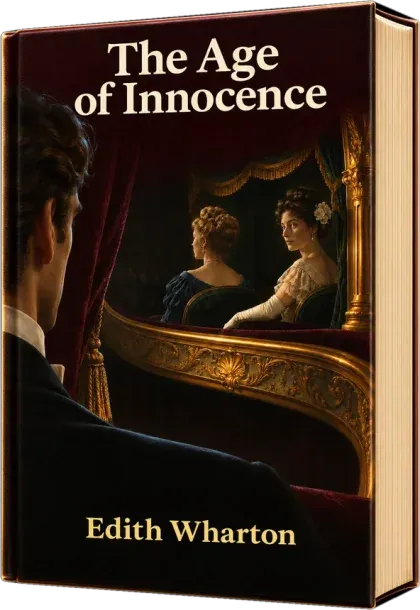
Edith Wharton · 1920
The Age of Innocence
At the Academy of Music in New York, Newland Archer can tell by the way May Welland touches her lilies that she loves him. He can tell by the sudden passage of an opera-glass from hand to hand that her cousin has done something dreadful. Countess Ellen Olenska has left her husband in Europe and taken a seat in the family box. To Archer, who expects shortly to marry May, the decent thing seems perfectly clear. He will cross the house and sit beside Ellen where everybody can see him. It is an easy distance to travel in an evening, and a perilous one to have travelled by morning. For what becomes of a young man’s excellent principles when the woman he has defended begins to take him at his word?
- Reading time
- About 6 h 30 min
- With the voice
- 9 h 42 min
- Length
- 101,941 words · 34 chapters
- Level
- B2 CEFR
Read the opening · Chapter 1 · 7 min
“On a January evening of the early seventies, Christine Nilsson was singing in Faust at the Academy of Music in New York.”
The first minutes of Chapter 1, the way the Lightkeeper app reads it: one line of words past an amber letter, with the voice. Switch to Page to see the whole paragraph.
End of the opening
Chapter 1 goes on in the app.
You caught 0 gems. The rest of the book waits in the app.
Text: Edith Wharton. Tap the ribbon to pause; tap while a line shimmers to catch it.
Who’s who
The Age of Innocence characters
-

Newland Archer
A young New York lawyer, Archer looks forward to introducing May Welland to all the books and places he loves. Defending her cousin Ellen gives him an unexpected occasion to test his belief in a woman’s freedom.
First named in Chapter 1
-
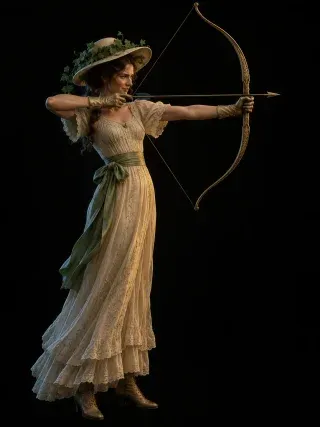
May Welland
Archer’s fiancée is a gifted archer herself, brought up to prize fair play and to leave a great many things unsaid. She wants to enter marriage sure that the man she loves has chosen her freely.
First named in Chapter 1
-
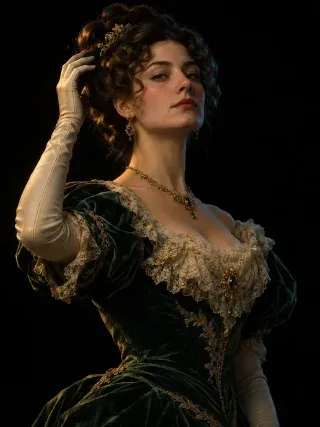
Countess Ellen Olenska
May’s cousin comes home from an unhappy marriage to a Polish nobleman, hoping to live among her own people again. Europe has given her a taste for choosing her own company and little preparation for the delicacy of choosing a seat at the New York opera.
First named in Chapter 2
-
Mrs. Manson Mingott
May and Ellen’s formidable grandmother enjoys liberties that would imperil the standing of a younger woman. She means to keep authority over her family and reserves the right to surprise them in its exercise.
First named in Chapter 1
-
Julius Beaufort
A banker of mysterious origins, Beaufort has secured a place in society through his marriage, his money, and a ballroom of exceptional splendour. He seeks Ellen’s company with an assurance that Archer finds particularly trying.
First named in Chapter 1
-
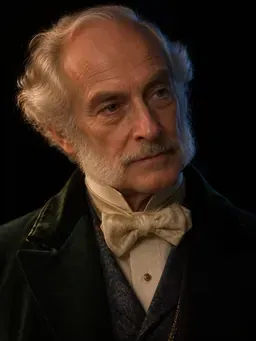
Sillerton Jackson
An authority on family connections and private histories, Jackson likes to hear every side of a story. His reputation for discretion ensures that he generally does.
First named in Chapter 1
-
Lawrence Lefferts
The club looks to Lefferts for a judgment on everything from evening dress to a lady’s conduct. He has domestic reasons of his own for wanting the conversation to turn on other people’s morals.
First named in Chapter 1
-
Medora Manson
Ellen’s aunt helped bring her up and feels entitled to advise her on the management of her marriage. The Marchioness’s fondness for unconventional company sits comfortably, in her own mind, beside her regard for a titled husband.
First named in Chapter 1
In the app you can talk to 11 of the characters. They answer from the page you’re on, so the story ahead stays yours to find. How it works
What happens
The Age of Innocence summary
Spoilers below.
Across the Footlights
On the evening when Newland Archer’s happiness seemed most delightfully assured, he had only to look across the Academy of Music to see what the rest of his life would be. May Welland sat with her eyes on the stage and her hand at the lilies-of-the-valley he had sent her. Christine Nilsson was pulling a daisy to pieces over a question May had that afternoon very nearly answered. In Italy, on their wedding journey, he would read Faust with her. There were so many things it would be a pleasure to show May, and so much charm in the thought that he should be the first to show them to her.
Then Lawrence Lefferts handed his glass to old Sillerton Jackson. A woman in dark blue velvet had taken the front seat in the Mingotts’ box. It was May’s cousin Ellen, who had married a Polish count, left him, and come home with the extraordinary idea that home was the place to come to under such circumstances. Archer crossed the house. He asked May if their engagement might be announced that night, and sat down beside the Countess in full view of the gentlemen whose judgment he had just ceased, for the moment, to value. Ellen remembered a kiss they had exchanged as children. Looking about at all the familiar faces, she could almost see the children still. It struck Archer that nobody had ever spoken quite so freely to him in a place where conversation was so closely observed.
At the Beauforts’ ball, with May’s lips at last under his in the conservatory, he rather wished they had kept their happiness to themselves. But an announcement, once made, had uses beyond the intentions of the persons immediately concerned. When the invitations to a dinner for Ellen came back with an almost concerted unanimity of regret, Archer could go to the great van der Luydens as a prospective member of the injured family. The van der Luydens had a duke dining with them. They asked Ellen to meet him. Ladies who until the day before had been unable to meet her at all now waited their turn for an introduction.
Ellen, who already knew the Duke, left him to come and talk to Archer. She wanted to hear about May. She wanted him to come to see her. And she wanted, with an earnestness oddly touching in a woman who could leave a duke to amuse himself, to learn how to be an American again.
Inside the book
34 chapters
- Chapter 1
- Chapter 2 At the Opera, Archer finally puts a name to the woman who has drawn every eye to May’s box.
- Chapter 3 The Beauforts have the finest ballroom in New York. How much of their past will it persuade guests to forget?
- Chapter 4 Betrothal sends Archer to seek the blessing of a woman quite content to let fashion come to her door.
- Chapter 5 Mr. Jackson brings the latest gossip to the Archers’ table, where one listener may ask for evidence.
- Chapter 6 Alone by the fire, Archer looks at May’s familiar photograph and catches sight of a stranger.
- Chapter 7 Mrs. Archer lays her case before a cousin whose kindness is proverbial and whose silence is hard to bear.
- Chapter 8 New York once wanted little Ellen painted, though even then it found something to regret in her cheeks.
- Chapter 9 At Ellen’s door on West Twenty-third Street, Archer wonders what the Count has left her to live on.
- Chapter 10 On a snowy walk, May tells Archer exactly why it matters that her lilies sometimes arrive late.
- Chapter 11 Mr. Letterblair summons his junior partner for a family matter that two senior partners must not hear.
- Chapter 12 On his evening walk, Archer can account for every caller he passes until Beaufort steps into his carriage.
- Chapter 13 At Wallack’s, the whole house waits for a farewell its heroine will never know she has received.
- Chapter 14 Outside the theatre, Winsett asks the name of a woman in the Beaufort box, and Archer bristles.
- Chapter 15 After iceboating, horse talk and a midnight pillow fight, Archer borrows a cutter for a visit of his own.
- Chapter 16 In St. Augustine, May has one startled question for the man who has come all this way to see her.
- Chapter 17 Over dinner, Janey tells Archer of Ellen’s Sunday call while his mother keeps her eyes on her plate.
- Chapter 18 Ellen enters dressed for a ball. What is it about a bouquet, of all things, that makes her flare up?
- Chapter 19 On the chancel step at Grace Church, even the eagerness of a waiting bridegroom has its prescribed form.
- Chapter 20 In rainy London, an invitation to dinner tests the etiquette May and Archer have brought across the sea.
- Chapter 21 From a Newport verandah, Archer watches young women take aim and society pause its talk to judge each shot.
- Chapter 22 At the Wellands’ luncheon table, an invitation sounds quite proper until Mrs. Welland names the guests.
- Chapter 23 Archer has told May he has business in Boston, but whose face is he picturing in its sweltering streets?
- Chapter 24 Over a lingering lunch, Ellen tells Archer how a city so eager to welcome her could leave her feeling alone.
- Chapter 25 Back on the boat, Archer wonders how a day that yielded so little could leave him so much at peace.
- Chapter 26 Fifth Avenue opens its shutters on schedule, and Mrs. Archer looks for signs that New York has changed.
- Chapter 27 What can a new emerald necklace at the Opera tell New York about the state of Beaufort’s bank?
- Chapter 28 At the telegraph counter, Archer must spell out Ellen’s name with Lawrence Lefferts at his elbow.
- Chapter 29 Waiting for the Washington express, Archer finds a private reason to be glad the Hudson still has no tunnel.
- Chapter 30 May is late for dinner, and when she does come down, it is Archer’s absence that needs explaining.
- Chapter 31 With her grandmother nearly recovered, what has made Ellen decide to stay under the old lady’s roof?
- Chapter 32 Beaufort’s fall brings the van der Luydens back to town. Who might claim his wife’s place in their absence?
- Chapter 33 At May and Archer’s first grand dinner, the Roman punch alone tells a guest what to expect of the company.
- Chapter 34 After thirty years, a chance remark at the Museum brings back a woman in a sealskin cloak walking away.
Lines worth keeping
The Age of Innocence quotes
I can’t love you unless I give you up.”
Each time you happen to me all over again.”
“It’s more real to me here than if I went up,” he suddenly heard himself say; and the fear lest that last shadow of reality should lose its edge kept him rooted to his seat as the minutes succeeded each other.
It was one of the great livery-stableman’s most masterly intuitions to have discovered that Americans want to get away from amusement even more quickly than they want to get to it.
In matters intellectual and artistic Newland Archer felt himself distinctly the superior of these chosen specimens of old New York gentility; he had probably read more, thought more, and even seen a good deal more of the world, than any other man of the number. Singly they betrayed their inferiority; but grouped together they represented “New York,” and the habit of masculine solidarity made him accept their doctrine on all the issues called moral. He instinctively felt that in this respect it would be troublesome—and also rather bad form—to strike out for himself.
Few things seemed to Newland Archer more awful than an offence against “Taste,” that far-off divinity of whom “Form” was the mere visible representative and vicegerent.
ThemesThe social uses of innocenceLove and the claims of familyWomen’s freedom and reputationThe eloquence of silenceMemory and the unlived life
Questions
Before you start
How long does it take to read The Age of Innocence?
The Age of Innocence is 101,941 words. At an average adult pace for fiction, about 260 words a minute (Brysbaert, 2019), that’s about 6 h 30 min. With the voice at normal speed it takes 9 h 42 min, and about 6 h 28 min at 1.5×.
Is there a The Age of Innocence audiobook with the text?
Yes. In Lightkeeper the voice reads while the words move past one amber letter, so your eyes and ears stay on the same word. Speed it up or slow it down and the voice keeps pace. The opening of Chapter 1 is on this page to try.
What reading level is The Age of Innocence?
B2 on the CEFR scale, which runs from A1, the easiest, to C2.
Read all of The Age of Innocence in Lightkeeper
With the voice, the gems to find and the characters to talk to. On iPhone and Android.
More from the shelf
You might read next
-
 The Vampire John William Polidori 1 h · C1
-
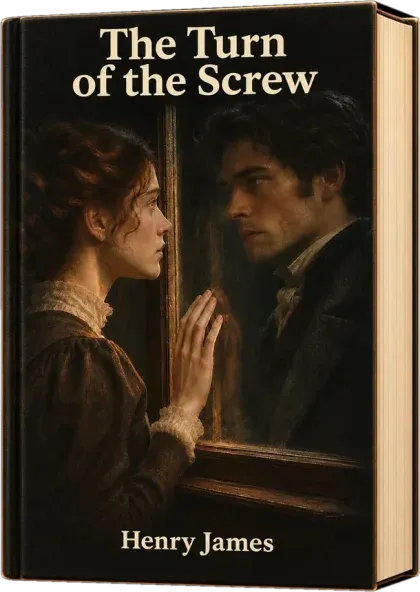 The Turn of the Screw Henry James 3 h 55 min · B2
-
 The Tell-Tale Heart and Other Tales of Terror Edgar Allan Poe 2 h 55 min · C1
-
 The Enchanted April Elizabeth von Arnim 7 h 35 min · B1
-
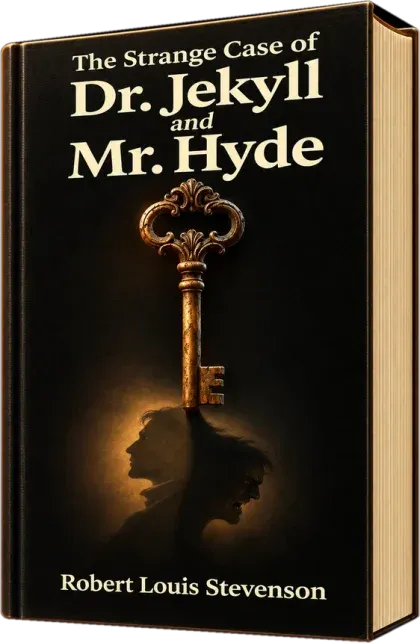 The Strange Case of Dr. Jekyll and Mr. Hyde Robert Louis Stevenson 2 h 20 min · B2
-
 The Picture of Dorian Gray Oscar Wilde 7 h 30 min · B1