
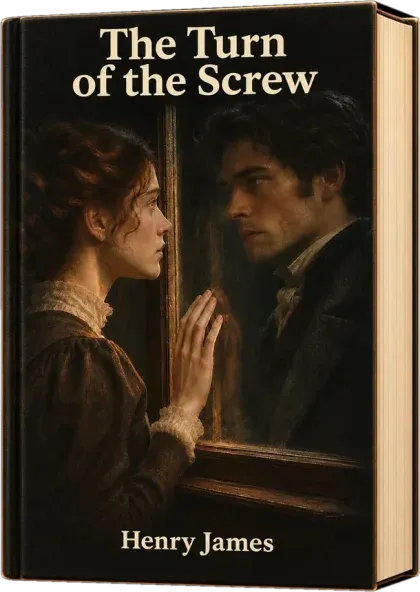
Henry James · 1898
The Turn of the Screw
At twenty, a young governess accepts the care of two orphans at Bly on a gentleman’s assurance that she may do precisely as she thinks best. He asks only that she never trouble him. It is easy to make such a promise in his presence, and easier still to keep it through a summer of lessons with Flora and her exquisite brother Miles. Then a stranger looks down from the tower. When she sees him again, his face is close against the dining-room glass, and his eyes pass over her in search of someone else. Whom can she ask for help when the person she most wishes to please has made silence the price of his trust?
- Reading time
- About 2 h 45 min
- With the voice
- 3 h 53 min
- Length
- 42,767 words · 25 chapters
- Level
- B2 CEFR
Read the opening · Prologue · 8 min
“The story had held us, round the fire, sufficiently breathless, but except the obvious remark that it was gruesome, as…”
The first minutes of Prologue, the way the Lightkeeper app reads it: one line of words past an amber letter, with the voice. Switch to Page to see the whole paragraph.
End of the opening
Prologue goes on in the app.
You caught 0 gems. The rest of the book waits in the app.
Text: Henry James. Tap the ribbon to pause; tap while a line shimmers to catch it.
Who’s who
The Turn of the Screw characters
-

The governess
At twenty she takes charge of two children at Bly, eager to deserve the confidence of their handsome uncle. When a stranger appears on the grounds, she believes the children’s safety depends upon her understanding what they cannot tell her.
-
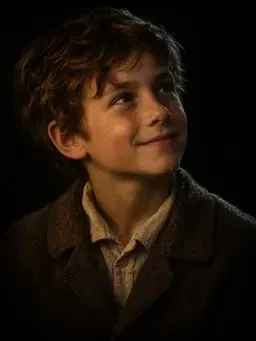
Miles
Flora’s elder brother comes home from school with delightful manners and a silence about what happened there. Fond as he is of his governess, he longs for the company of other boys and a greater say in his own affairs.
First named in Prologue
-

Flora
The younger orphan knows every corner of Bly and delights in showing her new governess about. She is devoted to Miles and quite capable of keeping a confidence of her own.
First named in Prologue
-
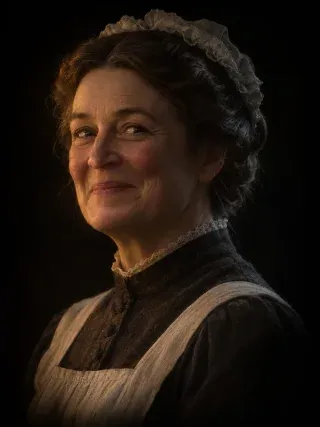
Mrs. Grose
Bly’s housekeeper has cared for Flora since the death of Miss Jessel. She wants to stand by the new governess, though her affection for the children sometimes leads her to read their behaviour differently.
First named in Prologue
-
Peter Quint
The master’s late valet once exercised his employer’s authority at Bly and made a particular companion of Miles. The man the governess sees watching the house answers to his description.
First named in Chapter 5
-
Miss Jessel
Flora’s former governess was intimate with Quint and died after leaving Bly. In the gaze of a woman in black, her successor believes she recognises Miss Jessel’s desire to reclaim her pupil.
First named in Chapter 7
-

The children’s uncle
The children’s guardian provides a country house, generous pay and full authority to the young woman who undertakes their care. What he wants in return is freedom from every question concerning them.
-
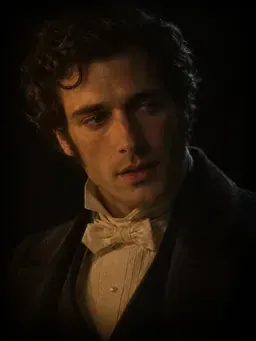
Douglas
As a student, Douglas won the confidence of his sister’s governess. Years later he brings her manuscript to a Christmas gathering so that his listeners may hear the story in her own words.
First named in Prologue
In the app you can talk to 8 of the characters. They answer from the page you’re on, so the story ahead stays yours to find. How it works
What happens
The Turn of the Screw summary
Spoilers below.
The Promise
On Christmas Eve, when Griffin had done with his tale of a little boy who saw a ghost, Douglas asked what the company would say to two children. For this story they must wait. The manuscript was in London, in the hand of a woman who had once taught his sister and who, one summer when he was home from his studies, had done him the honour of her confidence. He sent for it. When at last he opened it by the fire, it was the young woman herself they heard.
I was twenty when a gentleman in London offered me the charge of his brother’s orphaned children. He had a house for them at Bly, a housekeeper I might depend upon, and one condition — that whatever happened I should settle it without troubling him. I wished very much to be the person he seemed to think me. By the time little Flora took my hand and showed me her great house, up to the very top of the tower, I could have wished for no better employment in the world.
Inside the book
25 chapters
- Prologue
- Chapter 1 By the time the carriage turns into the avenue at Bly, the governess almost trusts her luck.
- Chapter 2 A letter from the headmaster reaches Bly with its seal intact and its answer left to the governess.
- Chapter 3 One look at Miles outside the inn makes it hard to credit the letter locked away at Bly.
- Chapter 4 After dark, the governess returns to a lamplit hall where Mrs. Grose has been wondering at her absence.
- Chapter 5 Mrs. Grose saw the governess at the window. How can she explain who stood there a moment before?
- Chapter 6 Behind the schoolroom door, how much can Mrs. Grose take on trust when she herself has seen nothing?
- Chapter 7 Flora said nothing by the lake. What makes the governess so sure the child saw what she saw?
- Chapter 8 With Bly asleep, the women return to one stubborn fact. Mrs. Grose knew both faces from a description.
- Chapter 9 The quiet days bring back an old pleasure, though the governess fears her fondness may give her away.
- Chapter 10 Back from the staircase, the governess finds her candle still burning and Flora’s little bed empty.
- Chapter 11 How can the governess get Mrs. Grose alone when she hardly dares let the children out of her sight?
- Chapter 12 By morning, half a dozen words from Miles have taken on a meaning Mrs. Grose struggles to hear.
- Chapter 13 For a month, the governess and her pupils grow ever more deft at steering clear of the same subjects.
- Chapter 14 On the walk to church, the governess wonders what she could say if Miles asked for his freedom.
- Chapter 15 Alone on a tomb while the others are in church, the governess wonders how much Miles guessed.
- Chapter 16 The children come home from church without a word about her absence, and even Mrs. Grose holds back.
- Chapter 17 Rain lashes the house as the governess leaves a blank page on her desk and listens at Miles’s door.
- Chapter 18 With the letter still in her pocket, the governess faces Miles at his most charming across the lesson table.
- Chapter 19 The governess leads Mrs. Grose to the lake, certain that Flora had good reason to go so far.
- Chapter 20 At the lake, the governess at last speaks the name she and Flora have never uttered between them.
- Chapter 21 Before daybreak, Mrs. Grose brings word of Flora’s fever and of the one person she dreads seeing.
- Chapter 22 With Flora and Mrs. Grose gone, the governess must face Miles in a house where even the maids stare.
- Chapter 23 As Miles rests his forehead against the glass, the governess wonders what he feels shut out of.
- Chapter 24 With Miles in her arms and Quint at the glass, can the governess keep the boy from turning round?
Lines worth keeping
The Turn of the Screw quotes
“I quite agree—in regard to Griffin’s ghost, or whatever it was—that its appearing first to the little boy, at so tender an age, adds a particular touch. But it’s not the first occurrence of its charming kind that I know to have involved a child. If the child gives the effect another turn of the screw, what do you say to two children—?”
I caught him, yes, I held him—it may be imagined with what a passion; but at the end of a minute I began to feel what it truly was that I held. We were alone with the quiet day, and his little heart, dispossessed, had stopped.
“That she should never trouble him—but never, never: neither appeal nor complain nor write about anything; only meet all questions herself, receive all moneys from his solicitor, take the whole thing over and let him alone. She promised to do this, and she mentioned to me that when, for a moment, disburdened, delighted, he held her hand, thanking her for the sacrifice, she already felt rewarded.”
But it was a comfort that there could be no uneasiness in a connection with anything so beatific as the radiant image of my little girl, the vision of whose angelic beauty had probably more than anything else to do with the restlessness that, before morning, made me several times rise and wander about my room to take in the whole picture and prospect; to watch, from my open window, the faint summer dawn, to look at such portions of the rest of the house as I could catch, and to listen, while, in the fading dusk, the first birds began to twitter, for the possible recurrence of a sound or two, less natural and not without, but within, that I had fancied I heard. There had been a moment when I believed I recognized, faint and far, the cry of a child; there had been another when I found myself just consciously starting as at the passage, before my door, of a light footstep. But these fancies were not marked enough not to be thrown off, and it is only in the light, or the gloom, I should rather say, of other and subsequent matters that they now come back to me.
Wasn’t it just a storybook over which I had fallen a-doze and a-dream? No; it was a big, ugly, antique, but convenient house, embodying a few features of a building still older, half-replaced and half-utilized, in which I had the fancy of our being almost as lost as a handful of passengers in a great drifting ship. Well, I was, strangely, at the helm!
“They go into no particulars. They simply express their regret that it should be impossible to keep him. That can have only one meaning.”
ThemesThe uncertainty of seeingChildhood innocence and secrecyPossession in the name of protectionClass and household authorityThe cost of silence
Questions
Before you start
How long does it take to read The Turn of the Screw?
The Turn of the Screw is 42,767 words. At an average adult pace for fiction, about 260 words a minute (Brysbaert, 2019), that’s about 2 h 45 min. With the voice at normal speed it takes 3 h 53 min, and about 2 h 35 min at 1.5×.
Is there a The Turn of the Screw audiobook with the text?
Yes. In Lightkeeper the voice reads while the words move past one amber letter, so your eyes and ears stay on the same word. Speed it up or slow it down and the voice keeps pace. The opening of Prologue is on this page to try.
What reading level is The Turn of the Screw?
B2 on the CEFR scale, which runs from A1, the easiest, to C2.
Read all of The Turn of the Screw in Lightkeeper
With the voice, the gems to find and the characters to talk to. On iPhone and Android.
More from the shelf
You might read next
-
 The Enchanted April Elizabeth von Arnim 7 h 35 min · B1
-
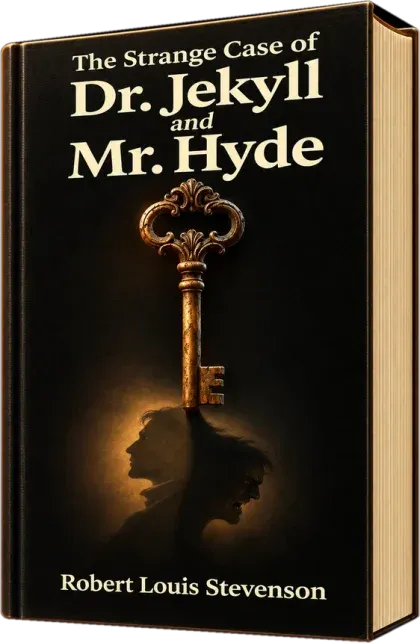 The Strange Case of Dr. Jekyll and Mr. Hyde Robert Louis Stevenson 2 h 20 min · B2
-
 The Picture of Dorian Gray Oscar Wilde 7 h 30 min · B1
-
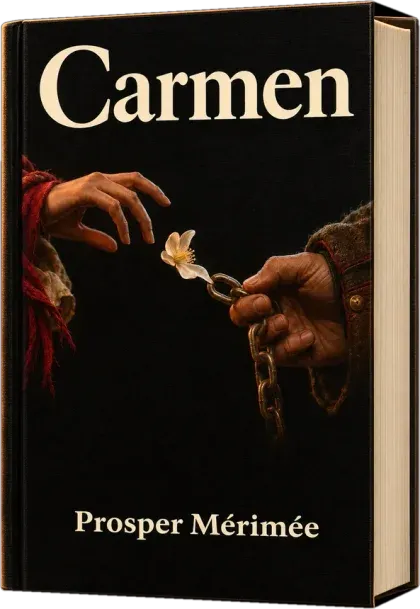 Carmen Prosper Mérimée 2 h 5 min · B1
-
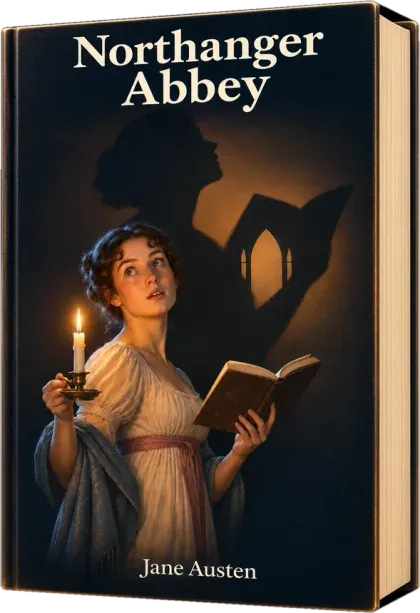 Northanger Abbey Jane Austen 7 h 10 min · B2
-
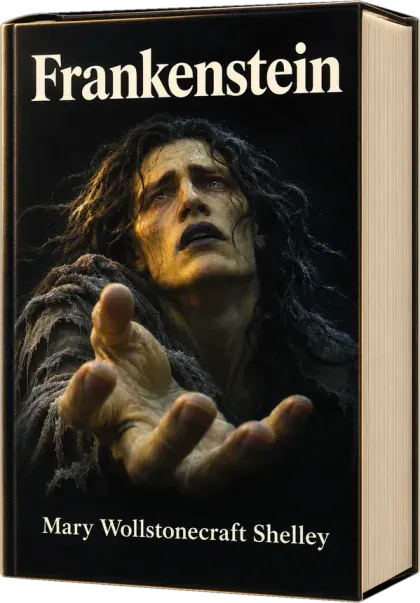 Frankenstein Mary Wollstonecraft Shelley 7 h 25 min · B2