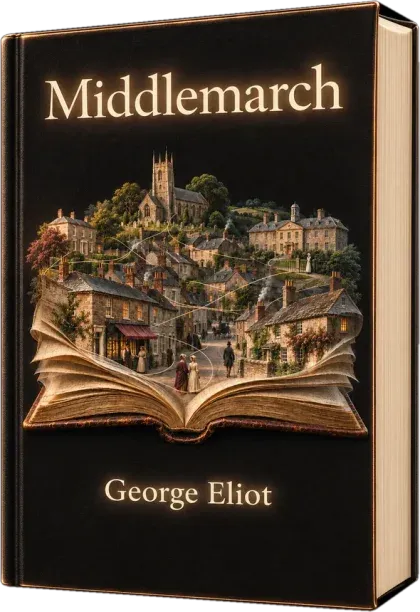
George Eliot · 1871
Middlemarch
In the drawing-rooms and country lanes of Middlemarch, everyone has an opinion about a suitable marriage. Dorothea Brooke wants something greater: a life of usefulness, learning, and devotion. To her neighbours’ bewilderment, she believes an elderly scholar can open that life to her. Meanwhile, an ambitious young doctor arrives determined to change medicine—and finds himself drawn to the town’s most accomplished beauty. Around them, fortunes are anticipated, debts concealed, and affection mistaken for opportunity. In a world where a woman’s future may turn upon her choice of husband, and a man’s independence upon his choice of friends, how much can anyone know of the life they are choosing?
- Reading time
- About 20 h 25 min
- With the voice
- 28 h 55 min
- Length
- 318,115 words · 88 chapters
- Level
- B2 CEFR
Read the opening · Prelude · 3 min
“Who that cares much to know the history of man, and how the mysterious mixture behaves under the varying experiments of…”
All of Prelude, the way the Lightkeeper app reads it: one line of words past an amber letter, with the voice. Switch to Page to see the whole paragraph.
End of Prelude
The rest of the book waits in the app.
You caught 0 gems. The rest of the book waits in the app.
Text: George Eliot. Tap the ribbon to pause; tap while a line shimmers to catch it.
Who’s who
Middlemarch characters
-
Dorothea Brooke
An ardent young woman who longs to turn her means and abilities towards something useful. She hopes that learning and devotion will show her how to live well.
First named in Book 1
-
Edward Casaubon
A wealthy clergyman absorbed in a vast study of mythology. He seeks an admiring companion and assistant, while guarding anxiously against doubts about his work.
First named in Book 1, Chapter 1
-

Will Ladislaw
Casaubon’s young cousin, imaginative, unconventional, and uncertain of his vocation. He wants work worthy of his talents and the freedom to choose his own course.
First named in Book 1, Chapter 3
-

Tertius Lydgate
An ambitious doctor newly arrived in Middlemarch, determined to improve medical practice and pursue scientific discovery. He believes his professional purpose will keep him independent.
First named in Book 1, Chapter 10
-
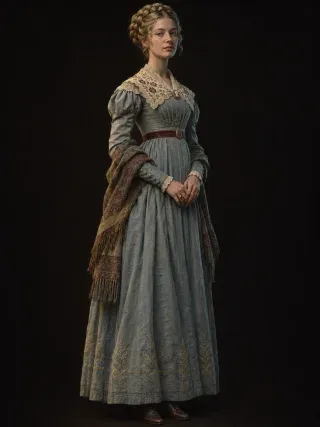
Rosamond Vincy
A beautiful, accomplished young woman with exacting ideas about a desirable life. She looks to marriage for refinement, distinction, and escape from provincial limitations.
First named in Book 1, Chapter 11
-
Fred Vincy
Rosamond’s good-natured but improvident brother, who prefers the prospect of an inheritance to choosing an occupation. He loves Mary Garth and hopes to win her confidence.
First named in Book 1, Chapter 11
-
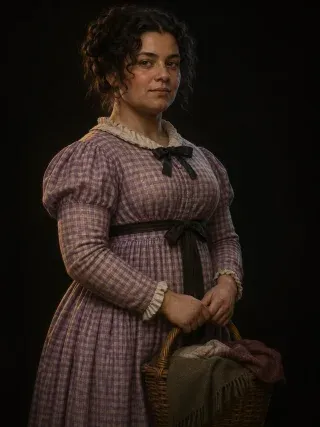
Mary Garth
A practical, witty young woman employed in Peter Featherstone’s household. Affection matters deeply to her, but she will not let it excuse irresponsibility.
First named in Book 1, Chapter 11
-

Caleb Garth
Mary’s father, an estate manager whose delight in useful work exceeds his talent for making money. He wants honest labour to support both his family and the people he helps.
First named in Book 3, Chapter 23
In the app you can talk to 18 of the characters. They answer from the page you’re on, so the story ahead stays yours to find. How it works
What happens
Middlemarch summary
Spoilers below.
The Shape of a Noble Life
Dorothea Brooke wished to make something of her life which should not end at the looking-glass. At Tipton Grange, where she and her sister Celia lived with their uncle, there were dinners, rides, and the mild business of being agreeable; beyond its comfortable rooms were labourers whose cottages scarcely sheltered them. Dorothea drew plans for better dwellings, and longed for knowledge which would give her goodness an effective shape.
Yet the world could enter through an emerald. Dividing their mother’s jewels, she first disclaimed ornaments, then found herself enchanted by a ring and bracelet. Celia observed these inconsistencies with an affectionate common sense which Dorothea sometimes found exceedingly trying. Her own inward life seemed so urgent that ordinary pleasures looked almost like impediments to duty.
Sir James Chettam willingly undertook her cottages, supposing that enthusiasm for his building might ripen into tenderness for himself. Dorothea believed him intended for Celia. Her reverence had already settled upon Edward Casaubon, whose learning promised entrance into a region where every hour possessed significance. His great work on the common origin of mythologies required assistance; surely a wife might become the humble companion of such an undertaking.
Celia saw an elderly gentleman with disagreeable habits. Mrs. Cadwallader saw a marriage requiring vigorous opposition. Dorothea saw a teacher, and accepted him. Within six weeks they were married and departing for Rome. Sir James, continuing the cottages, discovered gradually that Celia’s company had a pleasure which required no misinterpretation.
Elsewhere in Middlemarch, Tertius Lydgate was beginning a life he meant to distinguish by discovery. He would practise medicine honestly, investigate the foundations of living tissue, and help establish a hospital where treatment answered to knowledge rather than custom. Marriage could wait.
Rosamond Vincy, graceful, accomplished, and weary of provincial admirers, found his family connections almost as attractive as his person. She foresaw a finer existence opening before her. Her brother Fred looked towards a different deliverance: their wealthy uncle Featherstone might leave him Stone Court. Until then there were horses, debts, and Mary Garth, who loved him too well to admire his idleness.
Inside the book
88 chapters
- Prelude
- Book 1
- Book 1, Chapter 1 Behind Dorothea Brooke’s plain dress lies a mind her neighbours find harder to measure.
- Book 1, Chapter 2 Over dinner, Mr. Brooke’s wandering conversation gives Dorothea fresh cause for unease.
- Book 1, Chapter 3 Dorothea finds a world of promise in Casaubon’s learning—but how much of it is her own reflection?
- Book 1, Chapter 4 On the drive home, Celia questions Dorothea’s certainty about Sir James’s intentions.
- Book 1, Chapter 5 Casaubon’s letter arrives, giving formal expression to hopes Dorothea has already begun to cherish.
- Book 1, Chapter 6 An observant visitor reaches the Grange, with a sharp tongue and an eye for a bargain.
- Book 1, Chapter 7 Casaubon anticipates the comforts of marriage, though courtship has stirred surprisingly little passion.
- Book 1, Chapter 8 Sir James can bear losing Dorothea more easily than he can bear her choice of husband.
- Book 1, Chapter 9 Dorothea visits her future home, where she may choose what to change—and imagine what awaits her.
- Book 1, Chapter 10 Will Ladislaw leaves for Europe, still waiting for the world to reveal what his genius is meant to do.
- Book 1, Chapter 11 Lydgate has no intention of marrying soon, but Rosamond Vincy already answers his ideal of a woman.
- Book 1, Chapter 12 Fred and Rosamond ride towards Stone Court through a landscape rich with the familiarity of childhood.
- Book 2
- Book 2, Chapter 13 Mr. Vincy seeks a private word at the Bank, where Bulstrode’s visitor is taking longer than expected.
- Book 2, Chapter 14 Fred brings Featherstone the letter he demanded, but satisfying the old man is another matter.
- Book 2, Chapter 15 The narrator steps forward to consider how much room a hurried age allows for telling a life.
- Book 2, Chapter 16 A hospital appointment reveals how closely Middlemarch’s charities are bound to Bulstrode’s power.
- Book 2, Chapter 17 Lydgate visits Farebrother’s old parsonage, where three ladies await him among the family furnishings.
- Book 2, Chapter 18 As the hospital vote approaches, Lydgate’s growing regard for Farebrother complicates an easy choice.
- Book 2, Chapter 19 Dorothea’s wedding journey brings her to Rome, where unfamiliar art meets the limits of understanding.
- Book 2, Chapter 20 Alone in Rome, Dorothea struggles to name a sorrow she believes she has no right to feel.
- Book 2, Chapter 21 A visitor’s card interrupts Dorothea’s tears, offering a welcome reason to turn her thoughts outward.
- Book 2, Chapter 22 At dinner in Rome, Will finds an ease with Casaubon that Dorothea herself has struggled to achieve.
- Book 3
- Book 3, Chapter 23 Fred’s debt is coming due, and his confidence rests on hopes that now bear Caleb Garth’s signature.
- Book 3, Chapter 24 With five days to meet his debt, Fred discovers how little his hopeful calculations are worth.
- Book 3, Chapter 25 Fred arrives unannounced at Stone Court, with a confession that stills Mary’s laughter.
- Book 3, Chapter 26 Fred’s return from Houndsley brings an illness whose seriousness is not yet clear.
- Book 3, Chapter 27 Rosamond sees a welcome design in events that have brought Lydgate closer to her.
- Book 3, Chapter 28 Dorothea returns to Lowick as a wife, finding its familiar rooms strangely diminished in the winter light.
- Book 3, Chapter 29 The story turns towards Casaubon’s inward life, where marriage has its own unspoken expectations.
- Book 3, Chapter 30 Lydgate prescribes less work for Casaubon, but what could make leisure bearable to him?
- Book 3, Chapter 31 Lydgate and Rosamond discuss the Casaubons, revealing different ideas of a fortunate marriage.
- Book 3, Chapter 32 Around Featherstone’s sickbed, family devotion is sharpened by calculations of inheritance.
- Book 3, Chapter 33 Mary keeps the midnight watch beside Featherstone, sustained by thoughts and principles of her own.
- Book 4
- Book 4, Chapter 34 A crowd gathers for Featherstone’s grand funeral beneath a cold and changeable May sky.
- Book 4, Chapter 35 Featherstone’s mourners share a procession, but each has a private reckoning of what might be left.
- Book 4, Chapter 36 After the will is read, Mr. Vincy’s disappointment finds a new target in Fred’s idle future.
- Book 4, Chapter 37 Political change unsettles Middlemarch, where private interests make public principles hard to discern.
- Book 4, Chapter 38 At the Cadwalladers’, concern over Brooke’s politics meets an awkward question about his own estate.
- Book 4, Chapter 39 Sir James’s hopes of influencing Brooke bring Dorothea unexpectedly into the library with Will.
- Book 4, Chapter 40 At Caleb Garth’s breakfast-table, a costly pile of letters absorbs the attention usually given to work.
- Book 4, Chapter 41 Letters pass over the sale of Stone Court land, and an ordinary scrap of writing may hold hidden power.
- Book 4, Chapter 42 Casaubon summons Lydgate to Lowick, with an unspoken anxiety giving new weight to his illness.
- Book 5
- Book 5, Chapter 43 Dorothea seeks Lydgate in Middlemarch, afraid that ignorance of her husband’s condition may make her unjust.
- Book 5, Chapter 44 A walk through the hospital grounds offers Dorothea a chance to ask how she might be useful again.
- Book 5, Chapter 45 Opposition to the new hospital grows, with each side finding its own explanation for the dispute.
- Book 5, Chapter 46 As Reform stirs Middlemarch, Will urges Brooke to prepare public opinion before facing the voters.
- Book 5, Chapter 47 After a dispute with Lydgate, Will spends a restless night questioning what keeps him in Middlemarch.
- Book 5, Chapter 48 Leaving church, Dorothea fears that an encounter she hoped might heal a breach has only deepened it.
- Book 5, Chapter 49 After Casaubon’s burial, Sir James and Brooke consider something they dread Dorothea discovering.
- Book 5, Chapter 50 At Freshitt, Celia’s nursery offers Dorothea shelter, while difficult questions remain unasked.
- Book 5, Chapter 51 Election preparations absorb Will, who resists any attempt to connect his affairs with Dorothea’s.
- Book 5, Chapter 52 News of the Lowick living fills Farebrother’s household with joy and thoughts of what it may make possible.
- Book 5, Chapter 53 Bulstrode gains Stone Court, but the appointment of Lowick’s new clergyman troubles his satisfaction.
- Book 6
- Book 6, Chapter 54 Dorothea returns to Lowick, needing more occupation than the loving contemplation of Celia’s baby.
- Book 6, Chapter 55 Dorothea believes Will’s farewell is final, without knowing the resolve that lies behind his departure.
- Book 6, Chapter 56 In Caleb Garth, Dorothea finds someone who understands her wish to improve land and the lives upon it.
- Book 6, Chapter 57 On his way to Lowick, Fred stops at the Garths’, anxious to know how Mrs. Garth receives their new terms.
- Book 6, Chapter 58 Rosamond has known loss in marriage, but has yet to imagine anxiety over the household’s means.
- Book 6, Chapter 59 At Lowick Parsonage, news of Casaubon’s codicil reaches Fred amid a lively exchange of family opinions.
- Book 6, Chapter 60 A grand furniture sale promises Middlemarch a festival, with Trumbull ready to praise every lot.
- Book 6, Chapter 61 Bulstrode comes home to his wife’s account of an unwelcome caller he recognises all too readily.
- Book 6, Chapter 62 Will asks Dorothea for another farewell, painfully aware of how his lingering may appear.
- Book 7
- Book 7, Chapter 63 At a Christmas dinner, talk of Lydgate’s hospital work gives his fellow doctors an opening for criticism.
- Book 7, Chapter 64 With creditors closing in, Lydgate measures the distance between friendly sympathy and the money he needs.
- Book 7, Chapter 65 Rosamond waits secretly for Sir Godwin’s reply, while Lydgate considers an appeal of his own.
- Book 7, Chapter 66 Work still draws Lydgate beyond his troubles, though its relief is no longer the only one he seeks.
- Book 7, Chapter 67 Disgust at a night’s gambling leaves Lydgate facing the alternative he had hoped to avoid.
- Book 7, Chapter 68 Raffles returns at Christmas, bringing Bulstrode’s carefully guarded past close to his family.
- Book 7, Chapter 69 Caleb Garth comes to the Bank with something important to say, and takes his time beginning.
- Book 7, Chapter 70 At Stone Court, Bulstrode searches Raffles’s pockets for reassurance about where he has been.
- Book 7, Chapter 71 Five days after Raffles’s death, listeners gather at the Green Dragon with an appetite for gossip.
- Book 8
- Book 8, Chapter 72 Dorothea wants to defend Lydgate, but Farebrother sees difficulties in even asking what happened.
- Book 8, Chapter 73 Lydgate rides beyond Middlemarch, struggling with a rage he fears to carry home.
- Book 8, Chapter 74 In Middlemarch, a husband’s damaged reputation gives his wife’s acquaintances much to say.
- Book 8, Chapter 75 The creditors are paid, yet Rosamond finds little comfort in the marriage that remains.
- Book 8, Chapter 76 A summons to Lowick gives Dorothea the opportunity she has wanted to speak with Lydgate.
- Book 8, Chapter 77 With Lydgate away for the day, Rosamond fixes her hopes on Will’s expected arrival.
- Book 8, Chapter 78 After Dorothea’s departure, Rosamond reaches towards Will, trusting a power over him she has never tested.
- Book 8, Chapter 79 Lydgate finds Dorothea’s letter, while Will arrives knowing more about the day’s visits than he can say.
- Book 8, Chapter 80 Back at Lowick, Dorothea fills the hour before dinner with eager attention to other people’s concerns.
- Book 8, Chapter 81 Dorothea returns to ask for Rosamond, uncertain how her visit will be received.
- Book 8, Chapter 82 Distance has weakened Will’s reasons for staying away, and another purpose offers a route back.
- Book 8, Chapter 83 Restored by sleep but unable to settle, Dorothea searches for work that can contain her restless energy.
- Book 8, Chapter 84 At Freshitt, a political setback supplies fresh conversation about ambition, rank, and influence.
- Book 8, Chapter 85 A portrait of merciless judges raises an uneasy question about those who pronounce others guilty.
- Book 8, Chapter 86 Caleb comes home at teatime, then seeks Mary in the garden before he will settle down.
- Finale Beyond the endings already reached lie the years that will test what these lives have promised.
Lines worth keeping
Middlemarch quotes
That element of tragedy which lies in the very fact of frequency, has not yet wrought itself into the coarse emotion of mankind; and perhaps our frames could hardly bear much of it. If we had a keen vision and feeling of all ordinary human life, it would be like hearing the grass grow and the squirrel’s heart beat, and we should die of that roar which lies on the other side of silence. As it is, the quickest of us walk about well wadded with stupidity.
Your pier-glass or extensive surface of polished steel made to be rubbed by a housemaid, will be minutely and multitudinously scratched in all directions; but place now against it a lighted candle as a centre of illumination, and lo! the scratches will seem to arrange themselves in a fine series of concentric circles round that little sun. It is demonstrable that the scratches are going everywhere impartially and it is only your candle which produces the flattering illusion of a concentric arrangement, its light falling with an exclusive optical selection.
What do we live for, if it is not to make life less difficult to each other?
Her finely touched spirit had still its fine issues, though they were not widely visible. Her full nature, like that river of which Cyrus broke the strength, spent itself in channels which had no great name on the earth. But the effect of her being on those around her was incalculably diffusive: for the growing good of the world is partly dependent on unhistoric acts; and that things are not so ill with you and me as they might have been, is half owing to the number who lived faithfully a hidden life, and rest in unvisited tombs.
Many Theresas have been born who found for themselves no epic life wherein there was a constant unfolding of far-resonant action; perhaps only a life of mistakes, the offspring of a certain spiritual grandeur ill-matched with the meanness of opportunity; perhaps a tragic failure which found no sacred poet and sank unwept into oblivion. With dim lights and tangled circumstance they tried to shape their thought and deed in noble agreement; but after all, to common eyes their struggles seemed mere inconsistency and formlessness; for these later-born Theresas were helped by no coherent social faith and order which could perform the function of knowledge for the ardently willing soul.
Here and there a cygnet is reared uneasily among the ducklings in the brown pond, and never finds the living stream in fellowship with its own oary-footed kind. Here and there is born a Saint Theresa, foundress of nothing, whose loving heartbeats and sobs after an unattained goodness tremble off and are dispersed among hindrances, instead of centring in some long-recognizable deed.
ThemesMarriage and mistaken expectationsWomen’s aspirations and opportunitiesVocation and compromised ambitionMoney, dependence, and powerSympathy and moral responsibilityReform and provincial society
Questions
Before you start
How long does it take to read Middlemarch?
Middlemarch is 318,115 words. At an average adult pace for fiction, about 260 words a minute (Brysbaert, 2019), that’s about 20 h 25 min. With the voice at normal speed it takes 28 h 55 min, and about 19 h 17 min at 1.5×.
Is there a Middlemarch audiobook with the text?
Yes. In Lightkeeper the voice reads while the words move past one amber letter, so your eyes and ears stay on the same word. Speed it up or slow it down and the voice keeps pace. The opening of Prelude is on this page to try.
What reading level is Middlemarch?
B2 on the CEFR scale, which runs from A1, the easiest, to C2.
Read all of Middlemarch in Lightkeeper
With the voice, the gems to find and the characters to talk to. On iPhone and Android.