
Miguel de Cervantes · Don Quixote
Don Quixote Part 1, Chapter 37 summary
- Reading time
- About 16 min
- With the voice
- 22 min
- Length
- 4,252 words
- In the book
- 37 of 126 chapters
Summary
What happens in Part 1, Chapter 37
Spoilers for this chapter only.
While the others celebrate their good fortune, Sancho tells Don Quixote that his supposed giant was a wineskin and that Princess Micomicona is actually Dorothea. Don Quixote attributes the changes to enchantment, and Dorothea resumes her royal role so that the company can continue its plan to take him home. After Don Quixote angrily rebukes Sancho, Don Fernando settles the disagreement and confirms that they will depart together the next day. A Christian captive and a veiled Moorish woman arrive, and the women at the inn offer to share their accommodation. The captive explains that his companion wishes to become a Christian, and she insists on being called Maria rather than Zoraida. At supper, Don Quixote argues that arms surpass human letters because their ultimate purpose is peace, describes the hardships and eventual rewards of students, and prepares to compare them with the sufferings of soldiers.
Listen and read · Part 1, Chapter 37 · 2 min
“In which is continued the story of the famous Princess Micomicona, with other droll adventures.”
The opening of Part 1, Chapter 37, the way the Lightkeeper app reads it: one line of words past an amber letter, with the voice. Switch to Page to see the whole paragraph.
End of the opening
Part 1, Chapter 37 goes on in the app.
The rest of the book waits in the app.
Text: Miguel de Cervantes. Tap the ribbon to pause.
Who’s who
Characters in Part 1, Chapter 37
In the order they are named in this chapter.
-
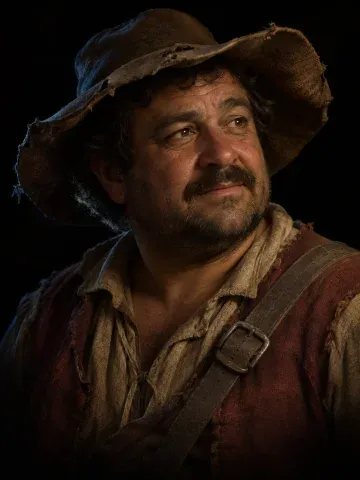
Sancho Panza
A labourer who becomes Don Quixote’s squire in hopes of governing an island. His appetite, proverbs, and practical judgment accompany a growing affection for his extraordinary master.
-
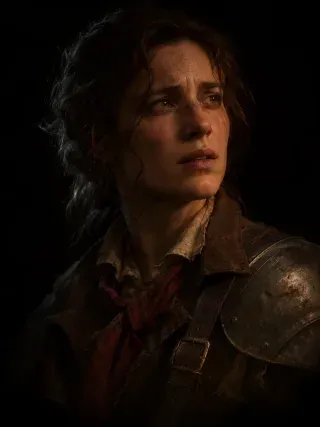
Dorothea
A resourceful young woman abandoned by Don Fernando after his promise of marriage. Seeking recognition and justice, she also lends her knowledge of romances to a plan involving Don Quixote.
-
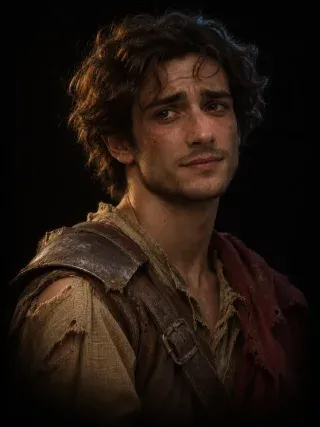
Cardenio
A young gentleman driven into the Sierra Morena by betrayal and anguish over Luscinda. He longs to recover the love and trust that have been taken from him.
-
The curate
Don Quixote’s friend and village priest, who blames chivalric romances for his delusions. He combines concern, literary judgment, and elaborate invention in his efforts to bring him safely home.
-
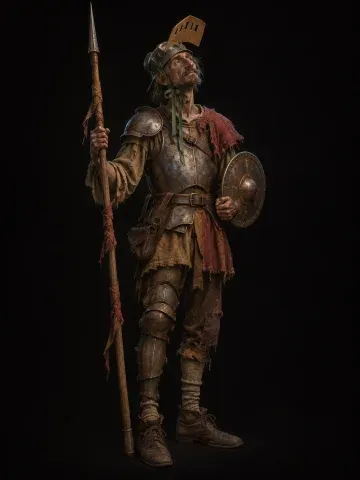
Don Quixote
A gentleman of La Mancha who models his life on books of chivalry and rides out to defend the helpless. Courageous, generous, and dangerously certain of his visions, he seeks honour and the favour of Dulcinea.
Lines worth keeping
Don Quixote Part 1, Chapter 37 quotes
“I could believe all that,” replied Sancho, “if my blanketing was the same sort of thing also; only it wasn’t, but real and genuine; for I saw the landlord, who is here today, holding one end of the blanket and jerking me up to the skies very neatly and smartly, and with as much laughter as strength; and when it comes to be a case of knowing people, I hold for my part, simple and sinner as I am, that there is no enchantment about it at all, but a great deal of bruising and bad luck.”
The end and goal of letters—I am not speaking now of divine letters, the aim of which is to raise and direct the soul to Heaven; for with an end so infinite no other can be compared—I speak of human letters, the end of which is to establish distributive justice, give to every man that which is his, and see and take care that good laws are observed: an end undoubtedly noble, lofty, and deserving of high praise, but not such as should be given to that sought by arms, which have for their end and object peace, the greatest boon that men can desire in this life. The first good news the world and mankind received was that which the angels announced on the night that was our day, when they sang in the air, ‘Glory to God in the highest, and peace on earth to men of goodwill;’ and the salutation which the great Master of heaven and earth taught his disciples and chosen followers when they entered any house, was to say, ‘Peace be on this house;’ and many other times he said to them, ‘My peace I give unto you, my peace I leave you, peace be with you;’ a jewel and a precious gift given and left by such a hand: a jewel without which there can be no happiness either on earth or in heaven. This peace is the true end of war; and war is only another name for arms.
Don Quixote delivered his discourse in such a manner and in such correct language, that for the time being he made it impossible for any of his hearers to consider him a madman; on the contrary, as they were mostly gentlemen, to whom arms are an appurtenance by birth, they listened to him with great pleasure as he continued: “Here, then, I say is what the student has to undergo; first of all poverty: not that all are poor, but to put the case as strongly as possible: and when I have said that he endures poverty, I think nothing more need be said about his hard fortune, for he who is poor has no share of the good things of life.
Check yourself
Part 1, Chapter 37 questions
-
Why does Dorothea continue to play Princess Micomicona?
- To persuade Don Fernando to restore her lost kingdom.
- To secure Sancho's promise to repay the innkeeper.
- To help the company convey Don Quixote to his home.
- To prevent Luscinda from revealing her noble birth.
Answer
C. To help the company convey Don Quixote to his home.
-
What does the captive explain about his Moorish companion?
- She is already baptised and has returned from a pilgrimage.
- She wishes to become a Christian and awaits baptism.
- She has come to find relatives who live near the inn.
- She understands Spanish but has promised to remain silent.
Answer
B. She wishes to become a Christian and awaits baptism.
-
On what basis does Don Quixote place arms above human letters?
- Arms require strength, which he values above intellectual effort.
- Arms guarantee wealth, which students seldom manage to acquire.
- Arms pursue peace, which he regards as the highest earthly good.
- Arms establish laws, which scholars can only study and interpret.
Answer
C. Arms pursue peace, which he regards as the highest earthly good.
Read all of Part 1, Chapter 37 with the voice
The whole chapter and the rest of Don Quixote wait in the Lightkeeper app, on iPhone and Android.