
Robert Louis Stevenson · The Strange Case of Dr. Jekyll and Mr. Hyde
Jekyll and Hyde Chapter 10 summary
Henry Jekyll’s Full Statement of the Case
- Reading time
- About 27 min
- With the voice
- 38 min
- Length
- 6,955 words
- In the book
- 10 of 10 chapters
Summary
What happens in Chapter 10
Spoilers for this chapter only.
Henry Jekyll explains that the conflict between his respectable ambitions and concealed pleasures led him to seek a way of separating the opposing elements of his nature. He creates a drug that transforms him into Edward Hyde, an entirely evil identity, while Jekyll himself remains a mixture of good and evil. He establishes a separate life for Hyde and indulges him until growing cruelty and an involuntary transformation reveal that he is losing control. After two months of restraint, Jekyll takes the potion again, and Hyde murders Sir Danvers. Jekyll returns to charitable work but later yields to temptation in his own identity, transforms unexpectedly in public, and arranges for Lanyon to help him recover his drugs. Further transformations become frequent, and when his original salt runs out, replacement supplies fail, leading him to suspect that an unknown impurity made the potion effective. Writing under the influence of his final dose, Jekyll seals his confession as he anticipates becoming Hyde permanently.
Listen and read · Chapter 10 · 2 min
“I was born in the year 18— to a large fortune, endowed besides with excellent parts, inclined by nature to industry…”
The opening of Chapter 10, the way the Lightkeeper app reads it: one line of words past an amber letter, with the voice. Switch to Page to see the whole paragraph.
End of the opening
Chapter 10 goes on in the app.
The rest of the book waits in the app.
Text: Robert Louis Stevenson. Tap the ribbon to pause.
Who’s who
Characters in Chapter 10
In the order they are named in this chapter.
-
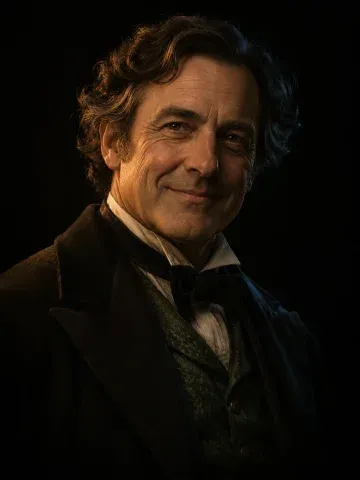
Dr. Jekyll
A respected physician with a comfortable household, distinguished friends and troubling private concerns. He asks for trust and discretion while insisting that his association with Hyde remains under his control.
-
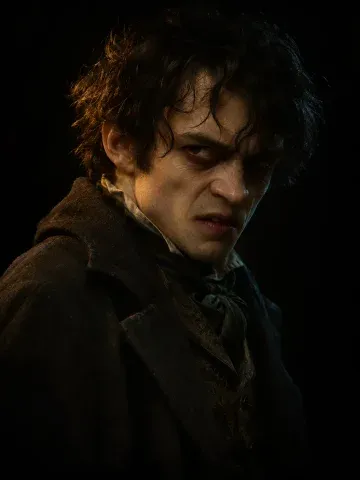
Mr. Hyde
A small, elusive man whose appearance inspires intense dislike without any readily identifiable deformity. He demands freedom from interference and enjoys extraordinary privileges in Jekyll’s household.
-
Sir Danvers Carew
An elderly, white-haired gentleman of standing, known to Utterson. His gentle courtesy embodies the civil world through which Hyde moves so uneasily.
-
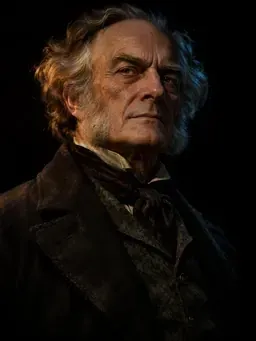
Dr. Lanyon
An established physician and old friend of Utterson and Jekyll. Firm in his scientific convictions, he has withdrawn from Jekyll over what he considers unsound speculation.
-
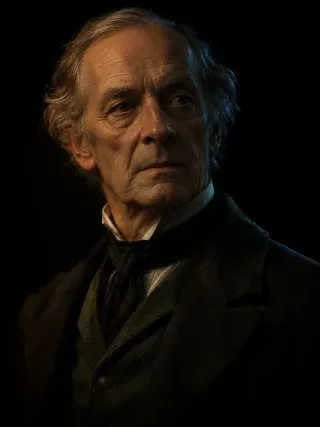
Poole
Jekyll’s elderly butler, accustomed to his master’s habits and protective of the household. His loyalty is strained by orders and occurrences he cannot understand.
Lines worth keeping
Jekyll and Hyde Chapter 10 quotes
With every day, and from both sides of my intelligence, the moral and the intellectual, I thus drew steadily nearer to that truth, by whose partial discovery I have been doomed to such a dreadful shipwreck: that man is not truly one, but truly two. I say two, because the state of my own knowledge does not pass beyond that point. Others will follow, others will outstrip me on the same lines; and I hazard the guess that man will be ultimately known for a mere polity of multifarious, incongruous and independent denizens.
Hence, although I had now two characters as well as two appearances, one was wholly evil, and the other was still the old Henry Jekyll, that incongruous compound of whose reformation and improvement I had already learned to despair. The movement was thus wholly toward the worse.
Yes, I had gone to bed Henry Jekyll, I had awakened Edward Hyde.
My provision of the salt, which had never been renewed since the date of the first experiment, began to run low. I sent out for a fresh supply, and mixed the draught; the ebullition followed, and the first change of colour, not the second; I drank it and it was without efficiency. You will learn from Poole how I have had London ransacked; it was in vain; and I am now persuaded that my first supply was impure, and that it was that unknown impurity which lent efficacy to the draught.
Check yourself
Chapter 10 questions
-
What moral distinction does Jekyll discover between his two identities?
- Jekyll is entirely good, while Hyde retains both good and evil.
- Both identities contain the same mixture of good and evil.
- Hyde is entirely evil, while Jekyll retains both good and evil.
- Both identities become entirely evil whenever the drug takes effect.
Answer
C. Hyde is entirely evil, while Jekyll retains both good and evil.
-
What follows Jekyll’s return to the potion after two months of restraint?
- Jekyll remains unchanged despite repeatedly increasing the dose.
- Hyde emerges more violent and murders an unresisting man.
- Jekyll immediately seeks Lanyon’s help to abandon the experiment.
- Hyde emerges weakened and struggles to remain in control.
Answer
B. Hyde emerges more violent and murders an unresisting man.
-
Why does Jekyll believe the replacement salt fails to produce an effective potion?
- The replacement salt requires a stronger tincture than he can prepare.
- The original salt contained an unknown impurity essential to its action.
- Hyde secretly substitutes another substance for every new supply.
- His body has become completely resistant to the original ingredients.
Answer
B. The original salt contained an unknown impurity essential to its action.
Read all of Chapter 10 with the voice
The whole chapter and the rest of The Strange Case of Dr. Jekyll and Mr. Hyde wait in the Lightkeeper app, on iPhone and Android.