
Miguel de Cervantes · Don Quixote
Don Quixote Part 2, Chapter 51 summary
- Reading time
- About 13 min
- With the voice
- 17 min
- Length
- 3,414 words
- In the book
- 103 of 126 chapters
Summary
What happens in Part 2, Chapter 51
Spoilers for this chapter only.
Doctor Pedro Recio keeps Sancho on such a restricted diet that he begins to curse his governorship. Asked to resolve a contradictory oath involving a bridge and a gallows, Sancho recalls Don Quixote's advice and recommends mercy. The majordomo praises his judgment and allows him a satisfying dinner, while planning a final joke against him. Don Quixote sends a letter praising Sancho's good sense and advising him on dress, food supplies, enforcement, moderation, and gratitude. Sancho replies with complaints about hunger and overwork, reports that he has taken no bribes, describes his market inspections and marriage plans, and asks for news of his family. While the prank's organizers arrange his dismissal, Sancho establishes regulations governing trade, prices, wages, public songs, and the examination of beggars, which survive as the Constitutions of the Great Governor Sancho Panza.
Listen and read · Part 2, Chapter 51 · 1 min
“Of the progress of Sancho’s government, and other such entertaining matters.”
The opening of Part 2, Chapter 51, the way the Lightkeeper app reads it: one line of words past an amber letter, with the voice. Switch to Page to see the whole paragraph.
End of the opening
Part 2, Chapter 51 goes on in the app.
The rest of the book waits in the app.
Text: Miguel de Cervantes. Tap the ribbon to pause.
Who’s who
Characters in Part 2, Chapter 51
In the order they are named in this chapter.
-
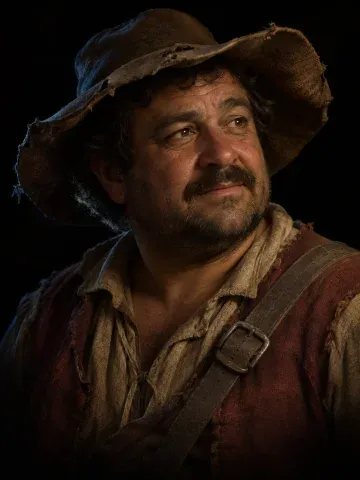
Sancho Panza
A labourer who becomes Don Quixote’s squire in hopes of governing an island. His appetite, proverbs, and practical judgment accompany a growing affection for his extraordinary master.
-
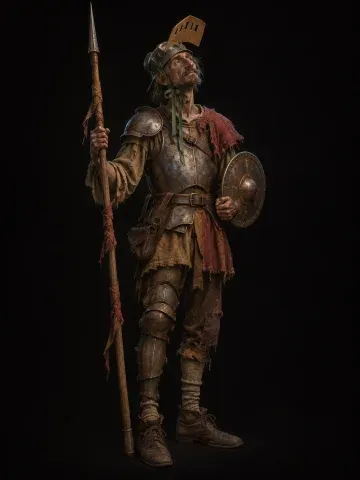
Don Quixote
A gentleman of La Mancha who models his life on books of chivalry and rides out to defend the helpless. Courageous, generous, and dangerously certain of his visions, he seeks honour and the favour of Dulcinea.
-
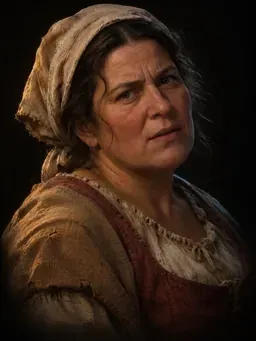
Teresa Panza
Sancho’s wife, who wants security for their household and a sensible future for their children. Her husband’s promises of rank must contend with her sharp understanding of ordinary life.
Lines worth keeping
Don Quixote Part 2, Chapter 51 quotes
“Look here, my good sir,” said Sancho; “either I’m a numskull or else there is the same reason for this passenger dying as for his living and passing over the bridge; for if the truth saves him the falsehood equally condemns him; and that being the case it is my opinion you should say to the gentlemen who sent you to me that as the arguments for condemning him and for absolving him are exactly balanced, they should let him pass freely, as it is always more praiseworthy to do good than to do evil; this I would give signed with my name if I knew how to sign; and what I have said in this case is not out of my own head, but one of the many precepts my master Don Quixote gave me the night before I left to become governor of this island, that came into my mind, and it was this, that when there was any doubt about the justice of a case I should lean to mercy; and it is God’s will that I should recollect it now, for it fits this case as if it was made for it.”
The majordomo kept his word, for he felt it against his conscience to kill so wise a governor by hunger; particularly as he intended to have done with him that same night, playing off the last joke he was commissioned to practise upon him.
Make not many proclamations; but those thou makest take care that they be good ones, and above all that they be observed and carried out; for proclamations that are not observed are the same as if they did not exist; nay, they encourage the idea that the prince who had the wisdom and authority to make them had not the power to enforce them; and laws that threaten and are not enforced come to be like the log, the king of the frogs, that frightened them at first, but that in time they despised and mounted upon.
Check yourself
Part 2, Chapter 51 questions
-
Why does Sancho finally recommend letting the man at the bridge go free?
- The judges must first prove that the man intended to deceive them.
- The judges have no authority to punish someone crossing the bridge.
- The man's oath concerns an event beyond the law's jurisdiction.
- The equally balanced arguments make mercy the better choice.
Answer
D. The equally balanced arguments make mercy the better choice.
-
What does Don Quixote advise Sancho about making proclamations?
- Let the townspeople decide which proclamations deserve obedience.
- Make punishments severe enough that enforcement becomes unnecessary.
- Issue many proclamations so that every possible dispute is covered.
- Issue few good proclamations and ensure that they are enforced.
Answer
D. Issue few good proclamations and ensure that they are enforced.
-
What are the people conducting the joke against Sancho arranging?
- How to have his wife join him on the island.
- How to send him to Don Quixote with gifts.
- How to bring his time as governor to an end.
- How to persuade him to dismiss his doctor.
Answer
C. How to bring his time as governor to an end.
Read all of Part 2, Chapter 51 with the voice
The whole chapter and the rest of Don Quixote wait in the Lightkeeper app, on iPhone and Android.