
Miguel de Cervantes · Don Quixote
Don Quixote Part 2, Chapter 43 summary
- Reading time
- About 9 min
- With the voice
- 13 min
- Length
- 2,400 words
- In the book
- 95 of 126 chapters
Summary
What happens in Part 2, Chapter 43
Spoilers for this chapter only.
Don Quixote continues preparing Sancho for government with advice about cleanliness, clothing, food, drink, manners, and daily habits. He repeatedly objects to Sancho's habit of stringing together proverbs, which Sancho struggles to restrain. Sancho admits that he cannot remember most of the advice and asks for a written copy so his confessor can remind him of it. Discussion of his inability to read or write leads Sancho to boast about the freedom and protection he expects from office and wealth. Don Quixote grows angry and questions his fitness to govern, but Sancho offers to relinquish the position rather than endanger his soul. Reassured by this answer, Don Quixote praises Sancho's natural instincts, urges him always to do right, and suggests they join their hosts for dinner.
Listen and read · Part 2, Chapter 43 · 1.5 min
“Of the second set of counsels Don Quixote gave Sancho Panza.”
The opening of Part 2, Chapter 43, the way the Lightkeeper app reads it: one line of words past an amber letter, with the voice. Switch to Page to see the whole paragraph.
End of the opening
Part 2, Chapter 43 goes on in the app.
The rest of the book waits in the app.
Text: Miguel de Cervantes. Tap the ribbon to pause.
Who’s who
Characters in Part 2, Chapter 43
In the order they are named in this chapter.
-
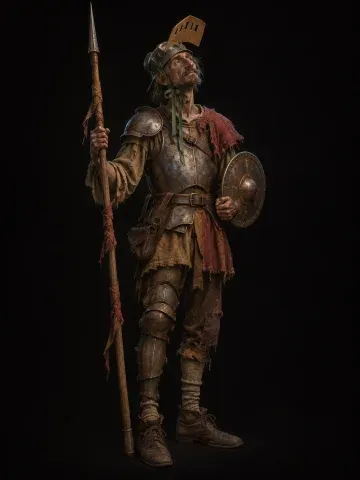
Don Quixote
A gentleman of La Mancha who models his life on books of chivalry and rides out to defend the helpless. Courageous, generous, and dangerously certain of his visions, he seeks honour and the favour of Dulcinea.
-
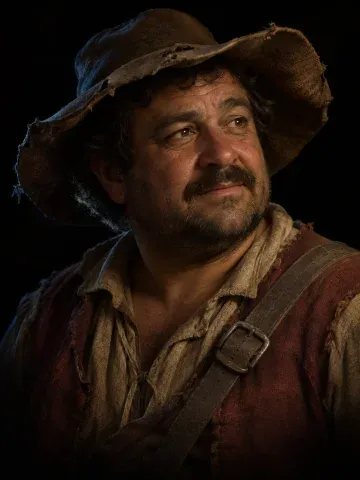
Sancho Panza
A labourer who becomes Don Quixote’s squire in hopes of governing an island. His appetite, proverbs, and practical judgment accompany a growing affection for his extraordinary master.
Lines worth keeping
Don Quixote Part 2, Chapter 43 quotes
“Be temperate in drinking, bearing in mind that wine in excess keeps neither secrets nor promises.
“To eruct, Sancho,” said Don Quixote, “means to belch, and that is one of the filthiest words in the Spanish language, though a very expressive one; and therefore nice folk have had recourse to the Latin, and instead of belch say eruct, and instead of belches say eructations; and if some do not understand these terms it matters little, for custom will bring them into use in the course of time, so that they will be readily understood; this is the way a language is enriched; custom and the public are all-powerful there.”
“Señor,” said Sancho, “if your worship thinks I’m not fit for this government, I give it up on the spot; for the mere black of the nail of my soul is dearer to me than my whole body; and I can live just as well, simple Sancho, on bread and onions, as governor, on partridges and capons; and what’s more, while we’re asleep we’re all equal, great and small, rich and poor. But if your worship looks into it, you will see it was your worship alone that put me on to this business of governing; for I know no more about the government of islands than a buzzard; and if there’s any reason to think that because of my being a governor the devil will get hold of me, I’d rather go Sancho to heaven than governor to hell.”
Check yourself
Part 2, Chapter 43 questions
-
What does Don Quixote object to in Sancho's use of proverbs?
- He strings them together without regard to their relevance.
- He refuses to explain their meaning to unfamiliar listeners.
- He changes their wording to flatter powerful listeners.
- He treats their advice as less valuable than formal learning.
Answer
A. He strings them together without regard to their relevance.
-
Why does Sancho ask for the counsels in writing despite being unable to read?
- He plans to learn to read before taking up his government.
- He hopes the duke will explain them to his future servants.
- He expects his confessor to remind him of their contents.
- He wants a secretary to turn them into official regulations.
Answer
C. He expects his confessor to remind him of their contents.
-
What makes Don Quixote finally declare Sancho worthy of governing?
- Sancho proves that his previous duties prepared him to govern.
- Sancho explains how wealth will protect him from public criticism.
- Sancho promises to abandon proverbs and follow every instruction.
- Sancho shows that he values his soul more than holding office.
Answer
D. Sancho shows that he values his soul more than holding office.
Read all of Part 2, Chapter 43 with the voice
The whole chapter and the rest of Don Quixote wait in the Lightkeeper app, on iPhone and Android.