
Miguel de Cervantes · Don Quixote
Don Quixote Part 2, Chapter 3 summary
- Reading time
- About 12 min
- With the voice
- 16 min
- Length
- 3,033 words
- In the book
- 55 of 126 chapters
Summary
What happens in Part 2, Chapter 3
Spoilers for this chapter only.
Samson Carrasco visits Don Quixote and confirms that a widely circulated history of his adventures has been written by Cide Hamete Benengeli and translated into Castilian. Don Quixote asks how he is portrayed, and Carrasco describes readers' favourite adventures while Sancho challenges details and recalls their beatings. They debate whether a history should preserve embarrassing facts or protect its hero's reputation. Sancho learns that readers enjoy his conversation but question his belief in the promised governorship, which he remains confident he could undertake. Carrasco reports criticism of an unrelated story inserted into the book, and the conversation turns to literary judgment, truth, and the difficulty of pleasing every reader. He also mentions missing explanations concerning the theft and return of Sancho's ass and the fate of a hundred crowns. Sancho goes home, promising answers after dinner, while Carrasco stays to eat with Don Quixote; after their afternoon sleep, Sancho returns and the conversation resumes.
Listen and read · Part 2, Chapter 3 · 2 min
“Of the laughable conversation that passed between Don Quixote, Sancho Panza, and the bachelor Samson Carrasco.”
The opening of Part 2, Chapter 3, the way the Lightkeeper app reads it: one line of words past an amber letter, with the voice. Switch to Page to see the whole paragraph.
End of the opening
Part 2, Chapter 3 goes on in the app.
The rest of the book waits in the app.
Text: Miguel de Cervantes. Tap the ribbon to pause.
Who’s who
Characters in Part 2, Chapter 3
In the order they are named in this chapter.
-
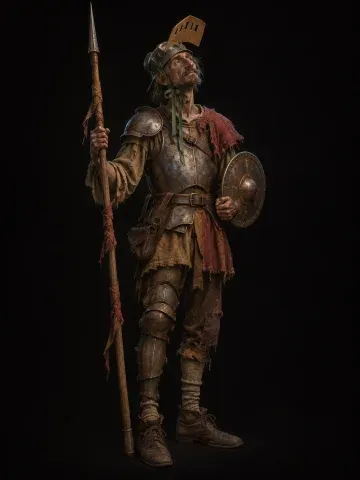
Don Quixote
A gentleman of La Mancha who models his life on books of chivalry and rides out to defend the helpless. Courageous, generous, and dangerously certain of his visions, he seeks honour and the favour of Dulcinea.
-
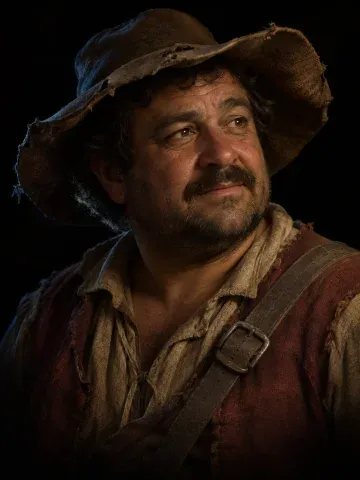
Sancho Panza
A labourer who becomes Don Quixote’s squire in hopes of governing an island. His appetite, proverbs, and practical judgment accompany a growing affection for his extraordinary master.
-
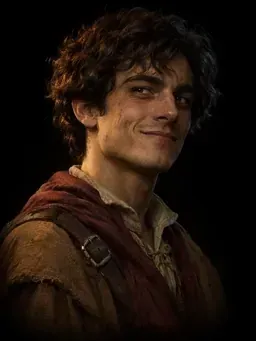
Samson Carrasco
A young bachelor familiar with the published history of Don Quixote’s adventures. He takes an active interest in bringing the wandering knight home, with more confidence than experience.
-
Dulcinea del Toboso
The magnificent lady Don Quixote imagines in the person of the farm-girl Aldonza Lorenzo. Unaware of the devotion bestowed upon her, she becomes the distant purpose of his deeds.
Lines worth keeping
Don Quixote Part 2, Chapter 3 quotes
“That is true,” said Samson; “but it is one thing to write as a poet, another to write as a historian; the poet may describe or sing things, not as they were, but as they ought to have been; but the historian has to write them down, not as they ought to have been, but as they were, without adding anything to the truth or taking anything from it.”
The cleverest character in comedy is the clown, for he who would make people take him for a fool, must not be one.
“All that is true, Señor Don Quixote,” said Carrasco; “but I wish such faultfinders were more lenient and less exacting, and did not pay so much attention to the spots on the bright sun of the work they grumble at; for if aliquando bonus dormitat Homerus, they should remember how long he remained awake to shed the light of his work with as little shade as possible; and perhaps it may be that what they find fault with may be moles, that sometimes heighten the beauty of the face that bears them; and so I say very great is the risk to which he who prints a book exposes himself, for of all impossibilities the greatest is to write one that will satisfy and please all readers.”
Check yourself
Part 2, Chapter 3 questions
-
What does Carrasco confirm about the history of Don Quixote's adventures?
- It has been printed widely and translated from Arabic into Castilian.
- It has been printed privately and circulated only among scholars.
- It remains an unfinished manuscript awaiting translation into Castilian.
- It exists in several languages but has never appeared in Castilian.
Answer
A. It has been printed widely and translated from Arabic into Castilian.
-
How does Carrasco distinguish the historian's task from the poet's?
- The historian should entertain readers, while the poet should instruct them.
- The historian should improve events, while the poet should preserve them.
- The historian should praise heroes, while the poet should expose faults.
- The historian should record events, while the poet may portray an ideal.
Answer
D. The historian should record events, while the poet may portray an ideal.
-
Which omissions do readers want the history to explain?
- How Rocinante recovered and why Don Quixote challenged the Biscayan.
- Where Dulcinea lived and why Sancho expected to become a governor.
- Who stole Dapple, how he returned, and what became of Sancho's money.
- Who translated the history and how its author learned about the battles.
Answer
C. Who stole Dapple, how he returned, and what became of Sancho's money.
Read all of Part 2, Chapter 3 with the voice
The whole chapter and the rest of Don Quixote wait in the Lightkeeper app, on iPhone and Android.